If You're Over 45 and Your Socks Leave Deep Rings Around Your Ankles By the End of the Day, Read This
For women 45 to 54, the end of the day often comes with a familiar, uncomfortable ritual.
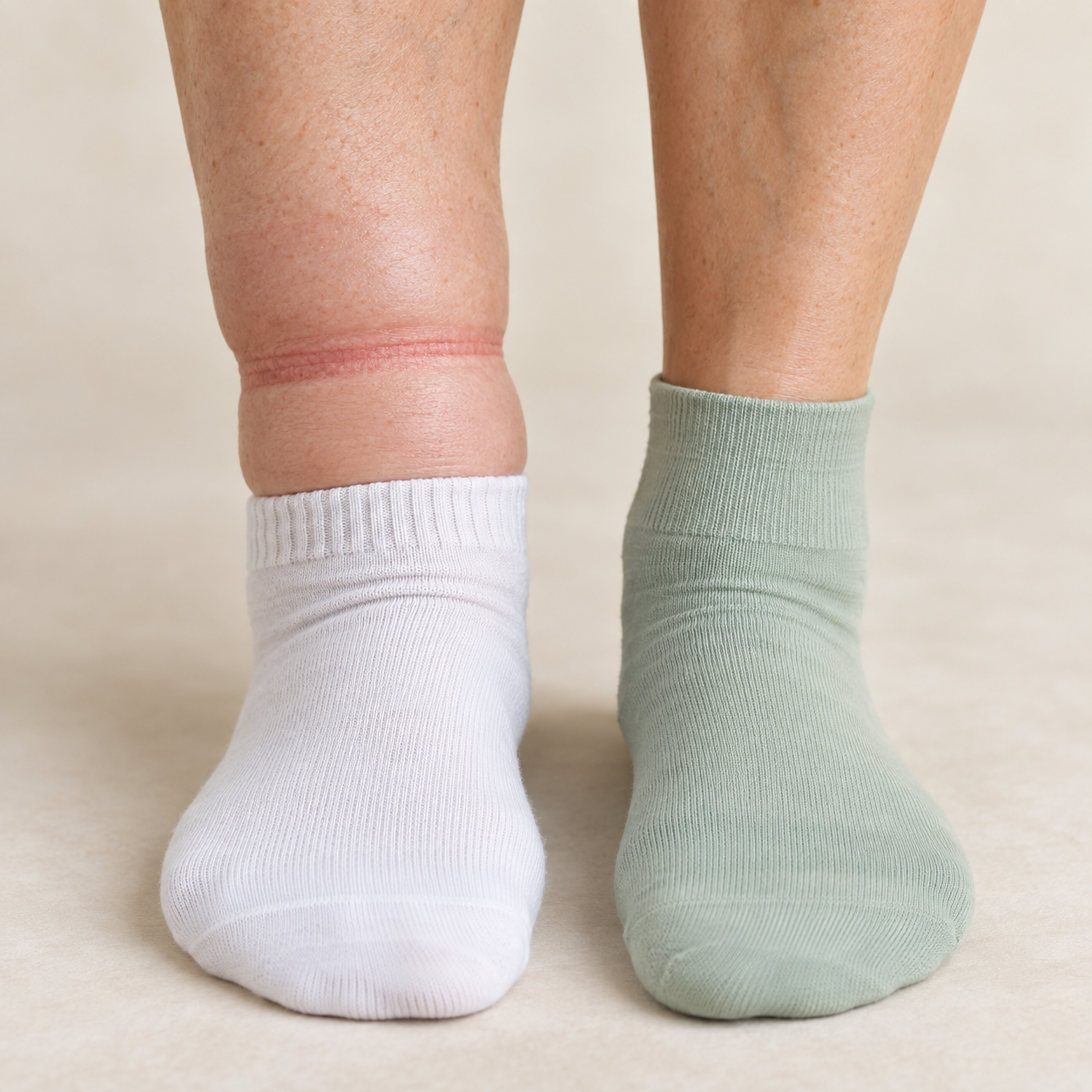
You pull off your sock at the end of a long day. And there it is: a deep, angry red ring pressed into your ankle. The kind that takes a full hour to fade.
You barely noticed the socks when you put them on this morning. They felt fine, actually. Comfortable, even.
But somewhere around lunchtime, things changed. Your shoes started feeling a little tighter. By mid-afternoon you were shifting in your seat, aware of a strange squeezing sensation around your ankle. By the time you got home, the first thing you did, before you even took off your coat, was sit down and peel those socks off.
Sound familiar?
If you're a woman between 45 and 54 and this is your daily reality, you're far from alone. And the frustrating part? You've probably already tried every workaround in the book.
Here's what nobody tells you: the problem probably isn't the size of your socks. It's the way ordinary socks are designed. And there's a simple reason why that design works against your feet and ankles as the day goes on.
Below, we break down exactly what's happening, why every standard fix falls short, and what women across the country are switching to instead.
The elastic ring left after a long day is a common experience for women in their late 40s and early 50s.
Here's something most people don't think about: your feet and ankles are not the same size at 7 in the morning as they are at 7 in the evening.
Throughout the day, especially when you're on your feet, standing, or even sitting in one position for extended periods, fluid naturally moves into the lower legs. Your ankles become softer and slightly puffier. It's a normal part of how the body works for many women in this stage of life.
The problem is that traditional socks are designed around one size. They use a tight elastic cuff to stay in place. That cuff is calibrated for a specific ankle circumference, typically the size of an ankle first thing in the morning.
By the afternoon, when your ankle has softened and shifted slightly, that same cuff hasn't changed at all. It's still applying the same pressure it was at 7am. But now your ankle is pressing back against it. The result is that familiar tight, squeezing feeling that worsens as the day goes on.
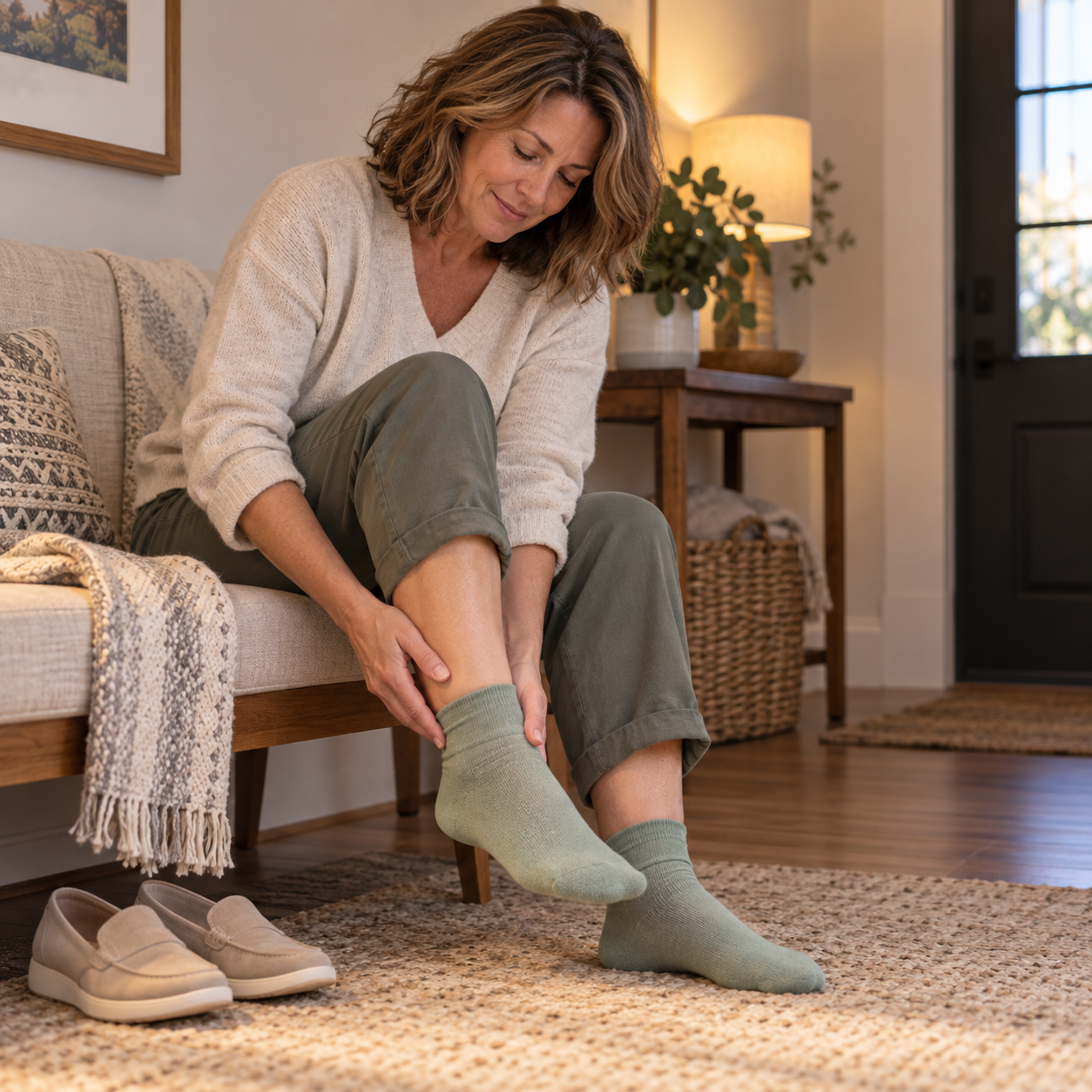
The usual workarounds, bigger sizes, folded cuffs, stretched elastic, treat the sock, not the real issue.
Let's go through the fixes most women try, and why each one falls short.
Buying a larger size seems logical. But sock sizing isn't precise enough for this to reliably help. A "large" sock often just means more fabric in the foot, not a looser cuff. You end up with a baggy sock that still digs in.
Stretching the cuff by hand gives you maybe 20 minutes of relief. Elastic is elastic. It springs back to its original tension, often within the first hour of wear.
Folding the cuff down doubles the elastic over itself, which can actually create more pressure in a narrower band. It also bunches inside your shoe and causes its own discomfort.
Generic loose socks often sacrifice structure entirely. They slide down inside your shoe, bunch at the toe, and create blisters or uncomfortable friction. Trading one problem for three isn't progress.
Taking them off when you get home is the most common solution, and it works. But it's not really a solution. It's giving up. And it means enduring discomfort for hours until you can finally get through the door.
The issue with all of these approaches is the same: they're trying to work around the elastic cuff rather than rethinking it. The cuff is the problem. Not the size of the sock. Not your feet. The cuff.
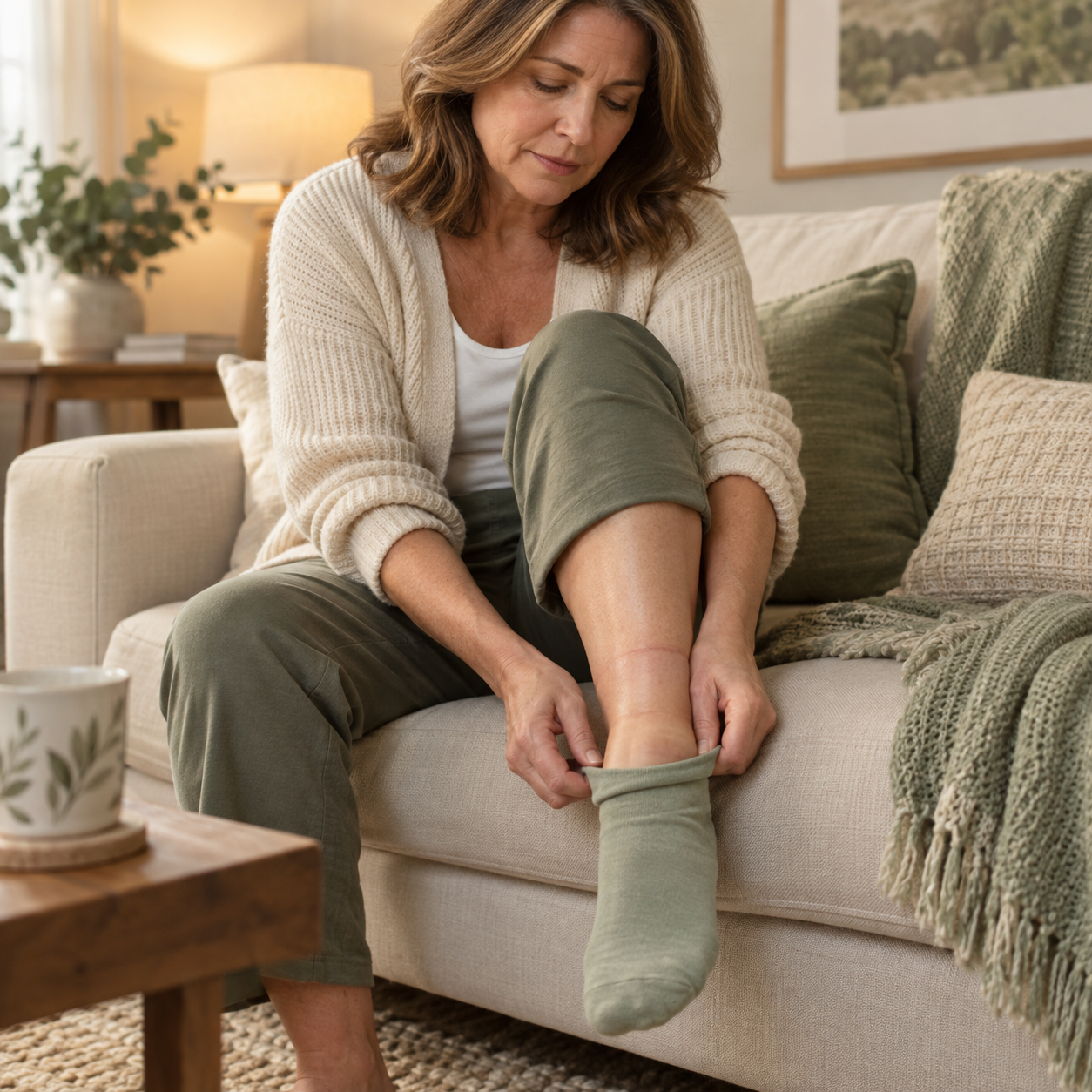
The deep ring isn't caused by the sock slipping, it's caused by an elastic cuff that can't adapt as your ankle softens throughout the day.
The deep red ring you see when you take your socks off has a simple explanation. Call it the "Sock Ring Effect."
Traditional sock cuffs use tightly woven elastic to grip the ankle and keep the sock from sliding down. That elastic is under constant tension. When it's pressing against soft, slightly puffy ankle tissue for hours at a time, it leaves an impression, the same way a tight waistband leaves a mark after a long car journey.
What makes this particularly noticeable for women in their late 40s and early 50s is that ankle tissue can become more sensitive and reactive during this stage of life. The skin itself may respond more visibly to prolonged pressure. So the ring that might have faded quickly at 30 lingers for an hour at 50.
This doesn't mean anything is wrong with you. It means you need a sock designed with that reality in mind. A sock whose cuff can stretch and give with you as your ankle size naturally fluctuates throughout the day, rather than maintaining the same rigid pressure from morning to night.
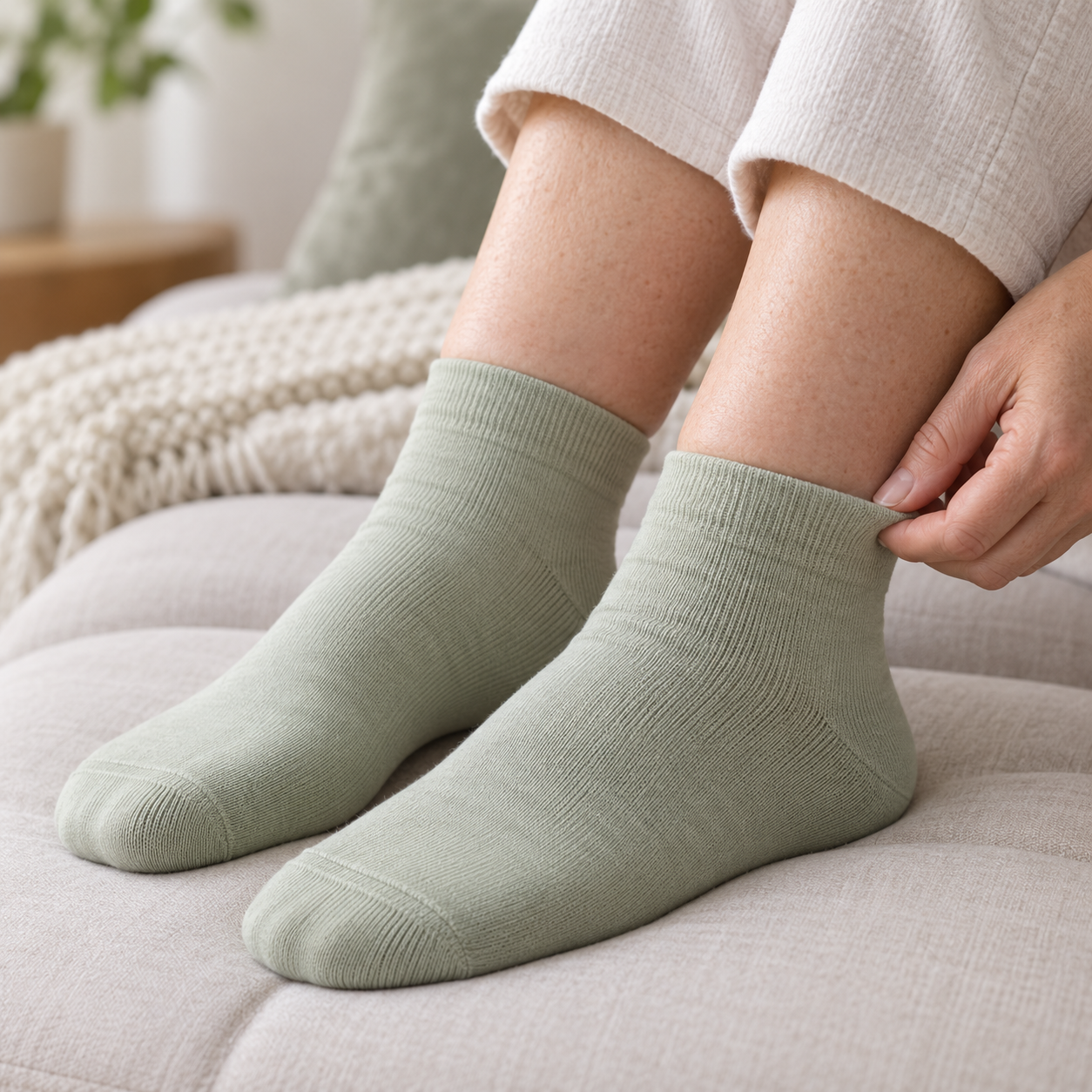
The right sock for a woman with sensitive or slightly swollen ankles should move with her body, not work against it.
For a sock to genuinely work for women whose ankles fluctuate throughout the day, it needs to approach the cuff problem differently from the ground up.
Instead of relying on tight elastic to stay in place, a comfort-focused design uses a gentler, more flexible cuff that can accommodate a slightly wider range of ankle sizes without digging in. It stretches to fit, rather than gripping to stay.
The fabric matters too. Softer materials, like bamboo, tend to feel smoother against sensitive or reactive skin. They're less likely to irritate the ankle area or leave friction marks. And because they breathe better, they can reduce that feeling of heat and pressure that builds up inside a shoe over a long day.
A roomy toe box also makes a difference. When toes aren't cramped, the entire foot feels more relaxed, which can ease some of the tension that travels up toward the ankle as the day goes on.
The goal isn't a sock that falls down. It's a sock that stays in place without applying the kind of unrelenting pressure that becomes uncomfortable by mid-afternoon. That's a design balance, and it's one that most mass-market socks have never been asked to strike, because most mass-market socks were never designed with the needs of women in their late 40s and early 50s in mind.
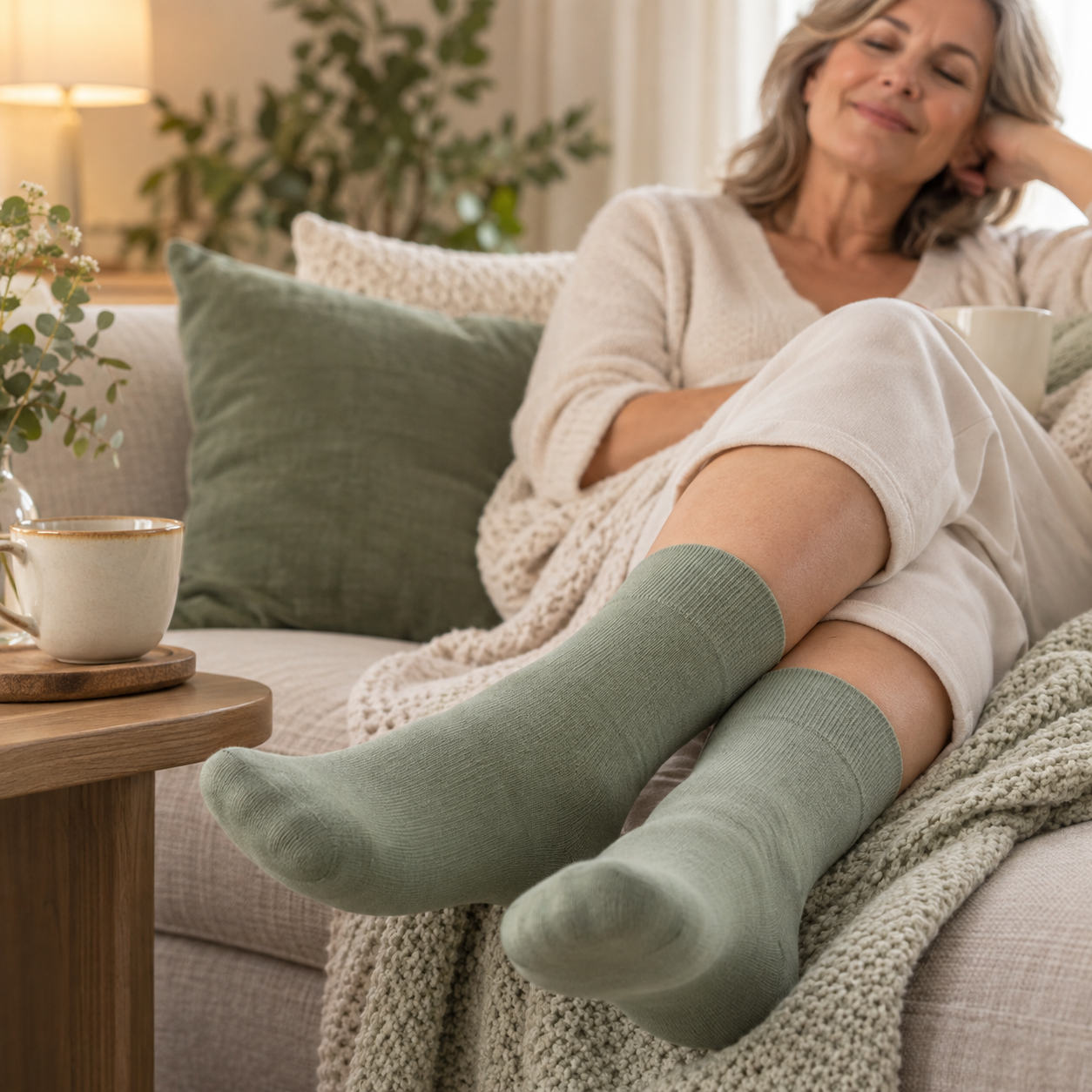
For many women, the first full day in a comfort-first sock is simply a day where they didn't think about their socks at all.
The most common thing women say after switching to a comfort-focused bamboo sock isn't that their feet feel amazing. It's simpler than that. They say they just stopped noticing their socks.
That's the real benchmark. Not a miracle. Not a dramatic transformation. Just a day that gets to be about your life, not about managing the discomfort creeping up your leg by 3pm.
They stop reaching down mid-afternoon to pull the cuff away from their ankle. They stop scheduling their day around when they can finally get home and take their shoes off. They stop looking at their ankles with that quiet dread when the socks come off at night.
For a woman who has spent years quietly working around this problem, that absence of discomfort is the transformation.
That's Why Women Across the Country Are Switching to HappyFeet Bamboo Socks
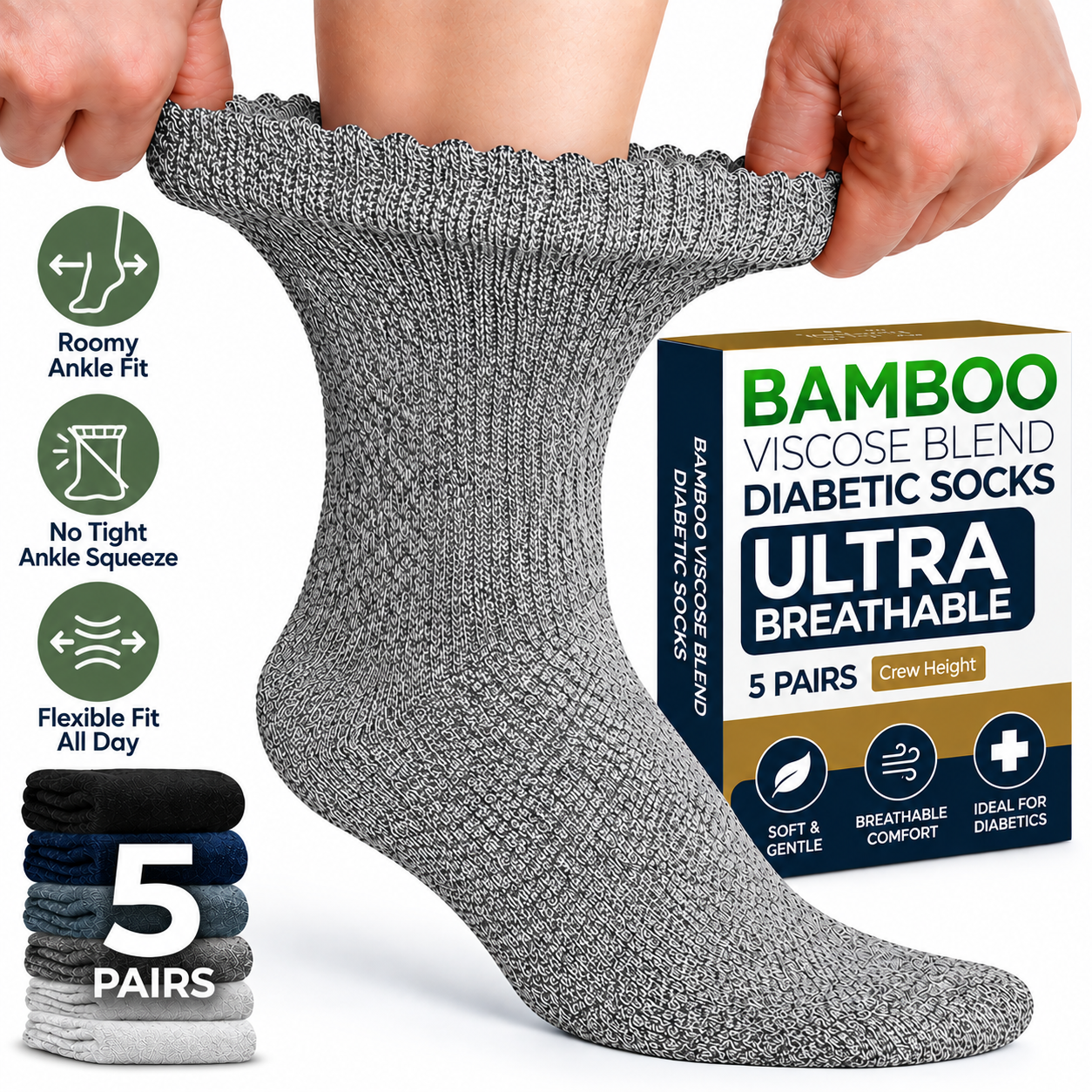
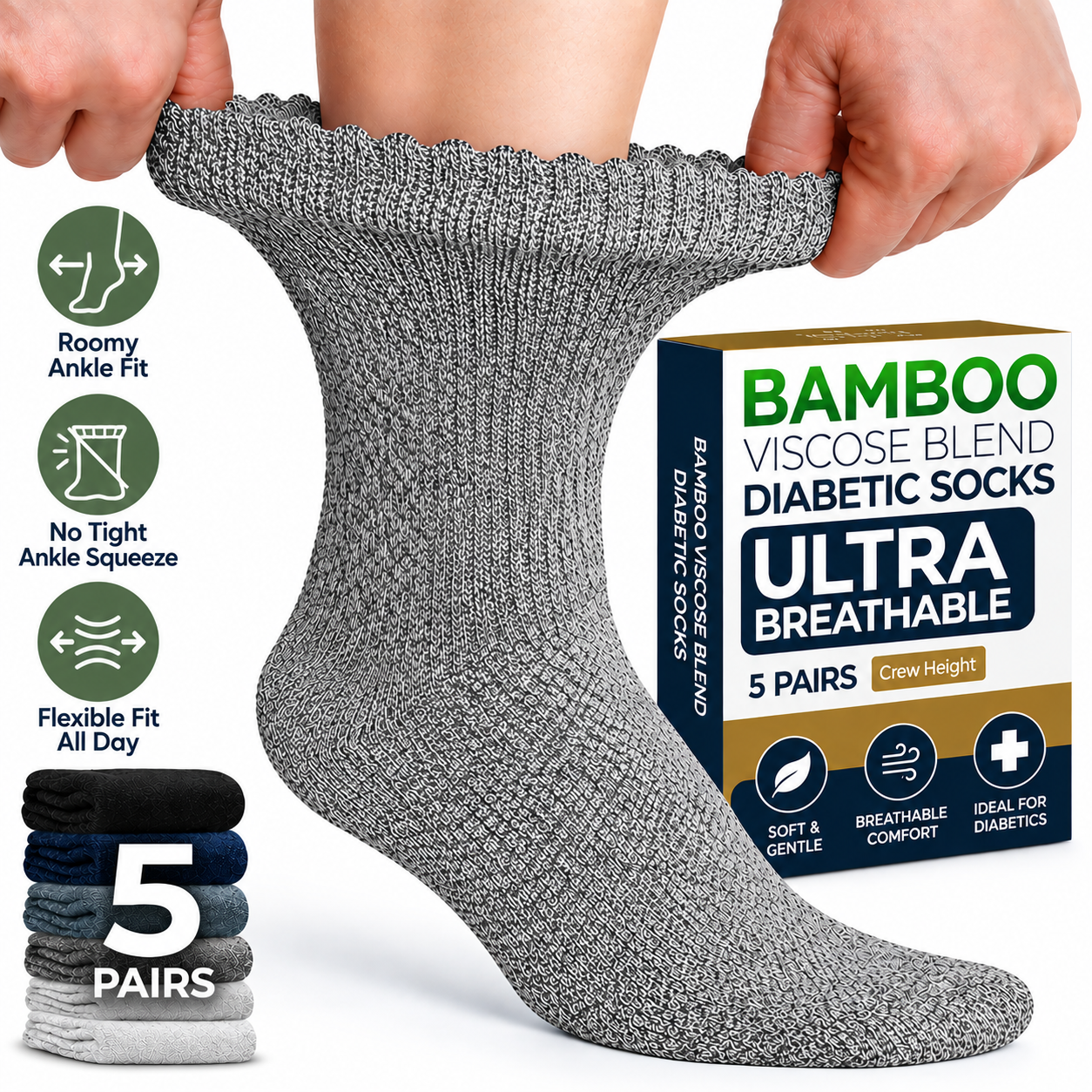
HappyFeet were designed specifically with comfort-first thinking: a roomy, flexible fit with a gentle cuff that accommodates ankles without the harsh, tight grip of traditional elastic. Made from soft bamboo fabric that breathes and feels smooth against sensitive skin.
They're not a medical product. They don't treat swelling or any underlying condition. They're simply a sock designed for the reality of how women's feet and ankles actually behave throughout a full day, and built to be comfortable from morning until evening without any of the common workarounds.
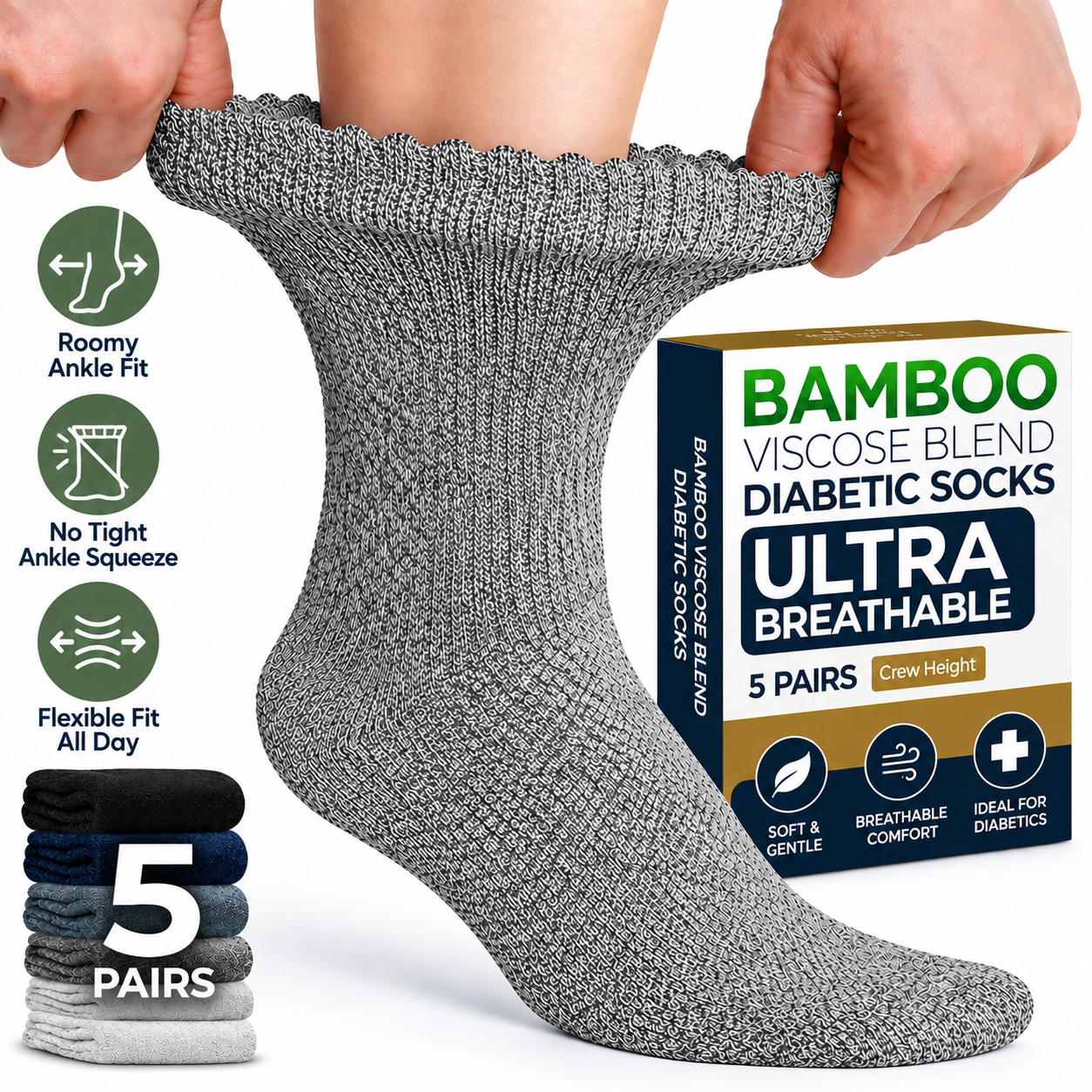
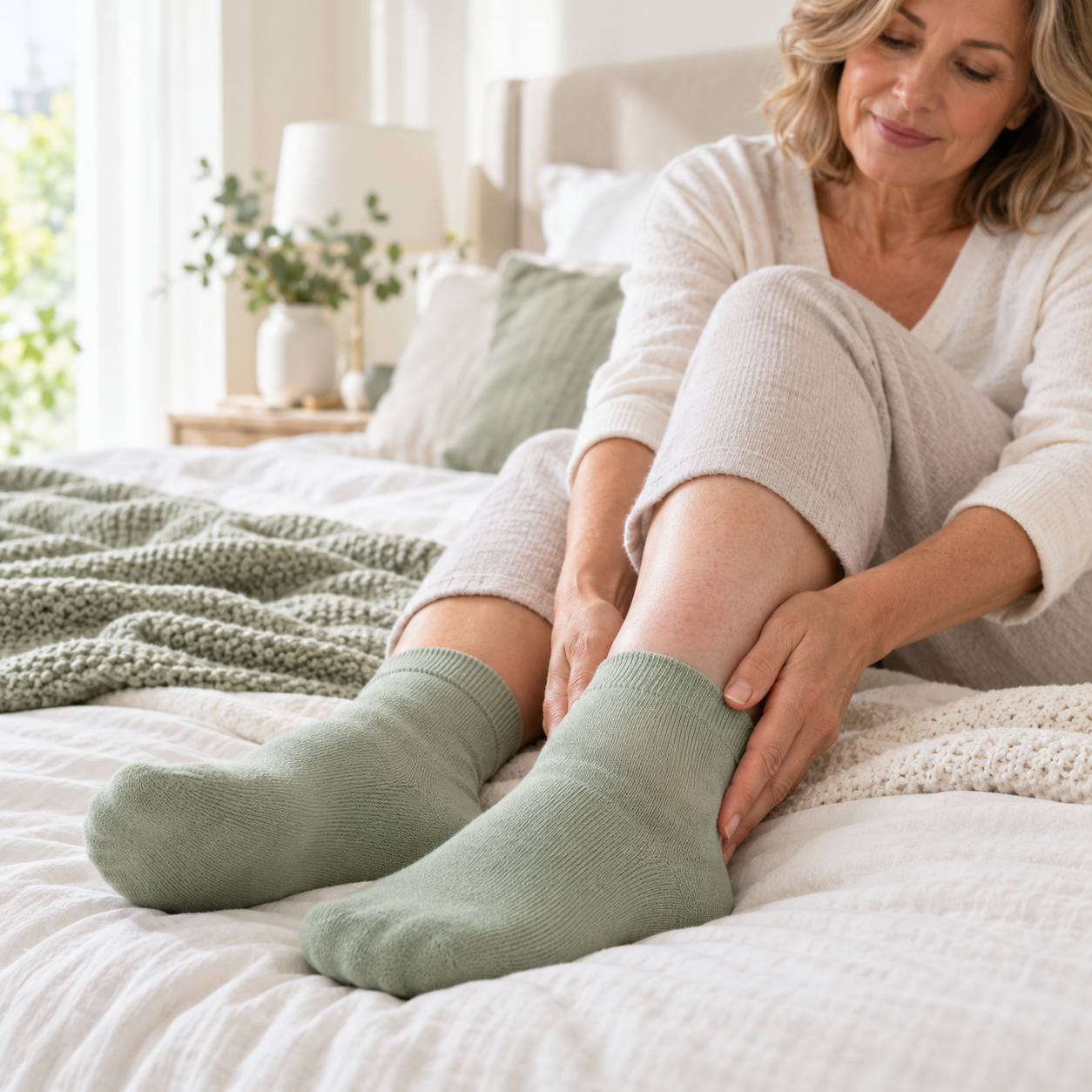
HappyFeet Bamboo Comfort Socks, soft, roomy, and designed to stay comfortable all day
What Makes HappyFeet Different
- ✔ Gentle, flexible cuff, stays in place without the tight elastic grip that digs into soft or swollen ankles
- ✔ Roomy, accommodating fit, designed to be comfortable even as your ankle size naturally fluctuates through the day
- ✔ Soft bamboo fabric, smooth against sensitive skin, less likely to leave marks or irritate reactive ankle tissue
- ✔ Breathable construction, reduces the heat and pressure build-up that makes ordinary socks feel increasingly tight by afternoon
- ✔ Comfortable toe area, roomy enough to keep the whole foot relaxed throughout extended everyday wear
- ✔ Designed for all-day wear, not just the morning, for women who need a sock that actually goes the distance
- ✔ No workarounds required, no folding, no stretching, no counting down the minutes until you can take them off
What Women Are Saying
"I almost didn't order because I figured they'd be like every other 'comfortable' sock I've tried. But by the second day I realized I'd made it all the way to dinner without once thinking about my ankles. For me, that's huge. I used to take my socks off before I'd even properly walked in the door."
"My ankles get puffy in the afternoon. I've bought probably six different brands of socks trying to solve this. I'd tried going up a size, which didn't help, and those loose diabetic-style socks that just slide down and bunch at your toes. These actually stay up and they don't leave that horrible ring. First time in years I've worn socks all day and not felt like I needed to peel them off the moment I sat down."
"Soft is not a strong enough word. These feel completely different from the moment you put them on. The cuff is nothing like a regular sock, there's no tight band, it just sits there. I work a long shift and I noticed around 4pm that I hadn't done my usual thing of pulling the sock away from my ankle. Ordered three more pairs."
"I've had swollen feet since my late 40s and finding comfortable socks has been a proper mission. These aren't magic but they're the best I've found. The fabric is lovely and they don't leave any marks. My feet feel much more at ease by the end of the day than they did with my old socks. Would recommend to anyone with the same problem."
UPDATE: As of September 17, 2026, demand for HappyFeet has increased significantly and the Buy 1 Get 5 Pairs offer is in high demand.
NOTE: This deal is NOT available on Amazon or eBay.
Buy 1 Pair, Get 5 Pairs Free: Stock limited, offer may end without notice