Why Nurses Are Rethinking the Socks They Wear for 12-Hour Shifts
Your shoes might have cost $150. But the layer touching your feet for the entire 12-hour shift probably cost $3. Here is why that matters more than you think.

For nurses and healthcare workers, foot comfort is not a luxury. It is a workplace essential that most job descriptions never mention.
The alarm goes off before sunrise. You are up, dressed, and pulling on your socks before most of the world is awake. You do not think much about those socks. You have spent real time thinking about your shoes because you have learned the hard way what a bad pair does to a 12-hour shift. But the socks? They are just socks.
That is the assumption most nurses and healthcare workers carry through their careers. And it is the assumption that tends to fall apart somewhere around hour eight.
Ask a nurse what starts hurting first on a long shift and feet will usually make the list. Not always because of bad shoes. Sometimes because of what is sitting between the shoe and the foot for twelve straight hours, absorbing heat, accumulating pressure with every step, and slowly, quietly becoming the most uncomfortable thing you are wearing.
"The socks that feel fine at 7AM can feel completely different by hour nine. That is not imagination. That is what thousands of steps inside a closed shoe actually does."
Most healthcare workers have never stopped to connect those two things. They have their shoes sorted. They have their compression levels considered. But the sock itself, the layer in direct contact with the skin for the entire shift, rarely gets the same thought.
That is starting to change. And the nurses who have made the switch are wondering why it took them so long.
Most socks were not designed for 12 hours of continuous wear
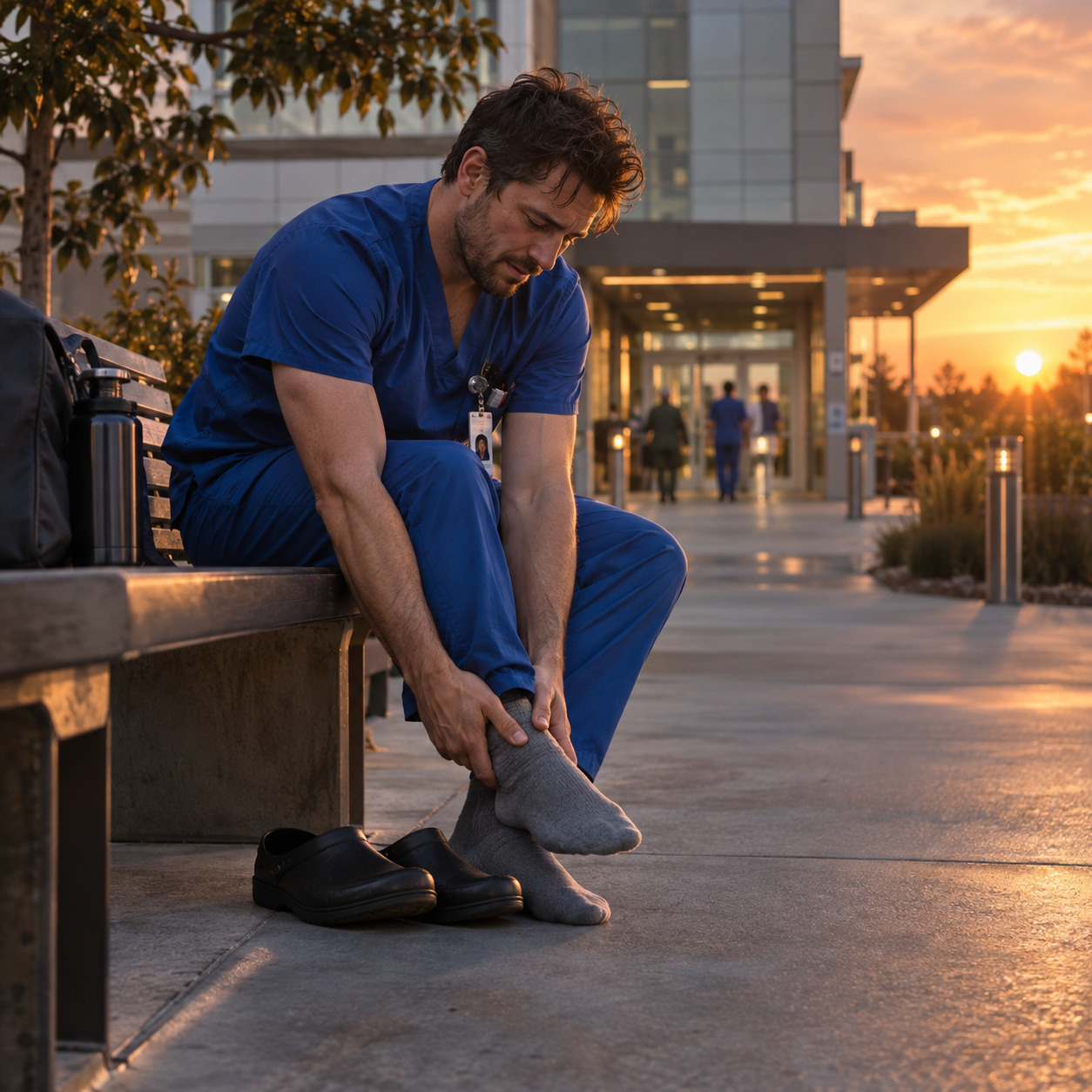
A sock designed for ordinary daily wear behaves very differently after thousands of steps inside a warm work shoe.
When you buy a pack of everyday socks, nobody on the design team is thinking about a 12-hour hospital shift. They are thinking about normal wear. An hour of commuting, a day sitting at a desk, a few hours of light movement. That is the use case ordinary socks are built around.
Healthcare work is a completely different environment. You are on your feet for stretches that most people never experience. You are walking thousands of steps between patient rooms, climbing stairs, standing at a nurses station for long periods with no real opportunity to rest. The cumulative effect on a sock, and on the foot inside it, is significant.
A sock that genuinely performs well across a 12-hour shift needs to feel comfortable from the first hour to the last. Most ordinary socks are not trying to do that job. And by the time you realize yours are not doing it, you are already four hours into a shift with nowhere to go.
Tight sock cuffs become more noticeable as the day progresses
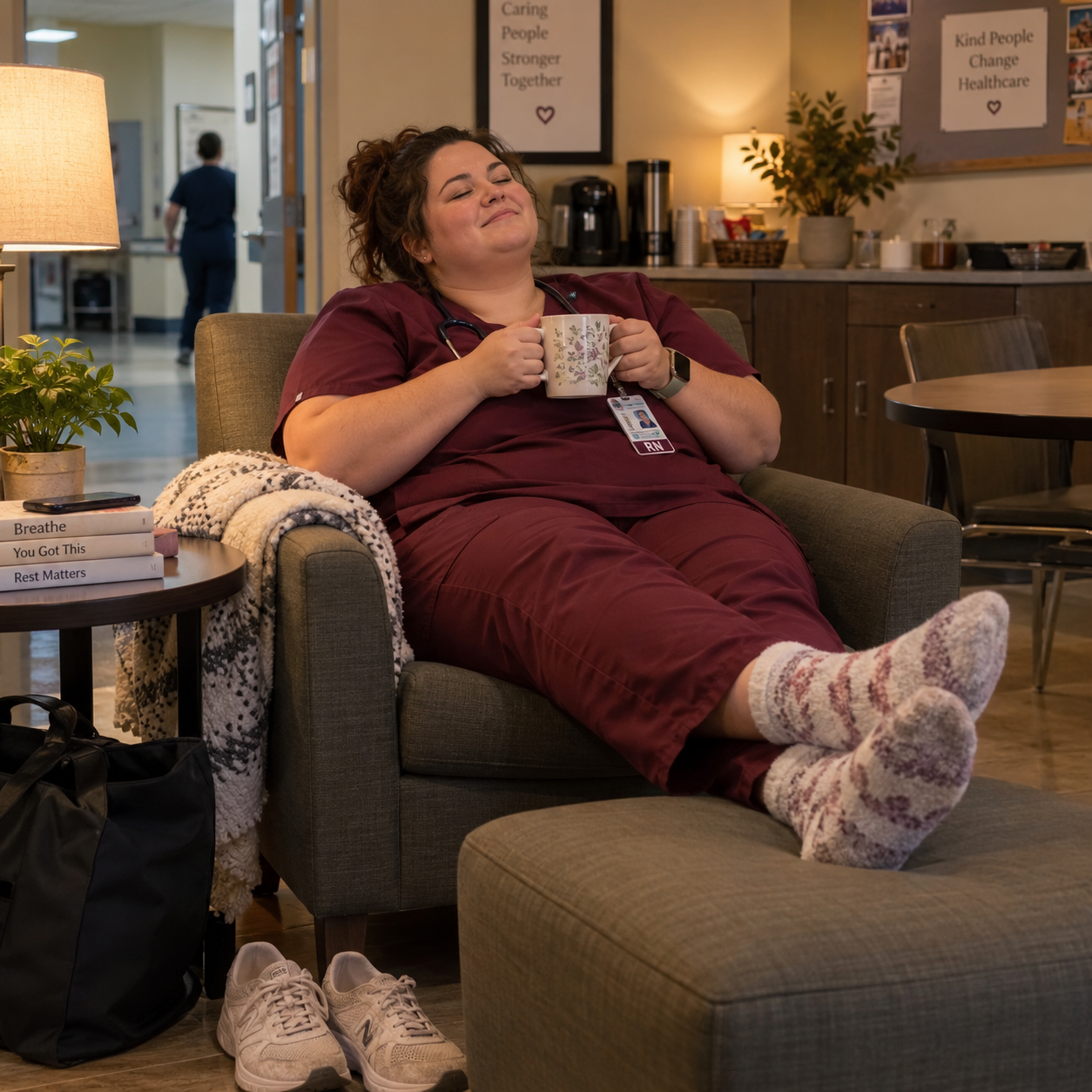
Deep sock marks at the end of a shift are a sign that the cuff has been working against the ankle rather than with it.
You have almost certainly noticed this. You get home, pull off your socks, and there is a clear ring around your ankle where the cuff has been sitting. Sometimes it fades quickly. Sometimes it takes a while. Either way, it tells you something about how that cuff spent the last eight or twelve hours.
Standard sock cuffs rely on elastic to stay up. That elastic grips the ankle, and while it feels neutral at the start of a shift, the sensation tends to become more noticeable over time. By hour seven or eight, some nurses are consciously adjusting their socks during breaks, pushing the cuff down slightly or tugging it into a more comfortable position.
It is a small thing. But small discomforts compound over a 12-hour shift. The cuff you barely noticed at 7AM can feel genuinely restrictive by 4PM, and that is energy and attention you would rather spend elsewhere.
Heat builds inside work shoes in ways that ordinary socks are not designed to manage

Closed work shoes trap heat. The material sitting against your skin determines how comfortable that environment stays over the course of a shift.
Nursing shoes, by necessity, are usually closed-toe, often leather or synthetic, and designed for hygiene and safety as much as for comfort. That means your feet spend the entire shift inside a relatively enclosed environment.
As the shift goes on, heat builds up inside the shoe. A sock made from a synthetic or rough cotton blend can start to feel hot and uncomfortable after hours in that environment. The fabric may bunch slightly, seams may start to register against the skin in ways they did not at the start of the shift, and the overall sensation inside the shoe becomes less neutral.
The material of your sock matters in this environment more than people realize. A softer, more breathable fabric can make a meaningful difference to how the inside of your shoe feels at hour ten compared to hour one. Nurses who have switched to bamboo-based socks frequently mention this. The inside of the shoe simply feels different. Less hot. Less rough. Less something to endure.
Nurses spend serious money on shoes but almost nothing on socks
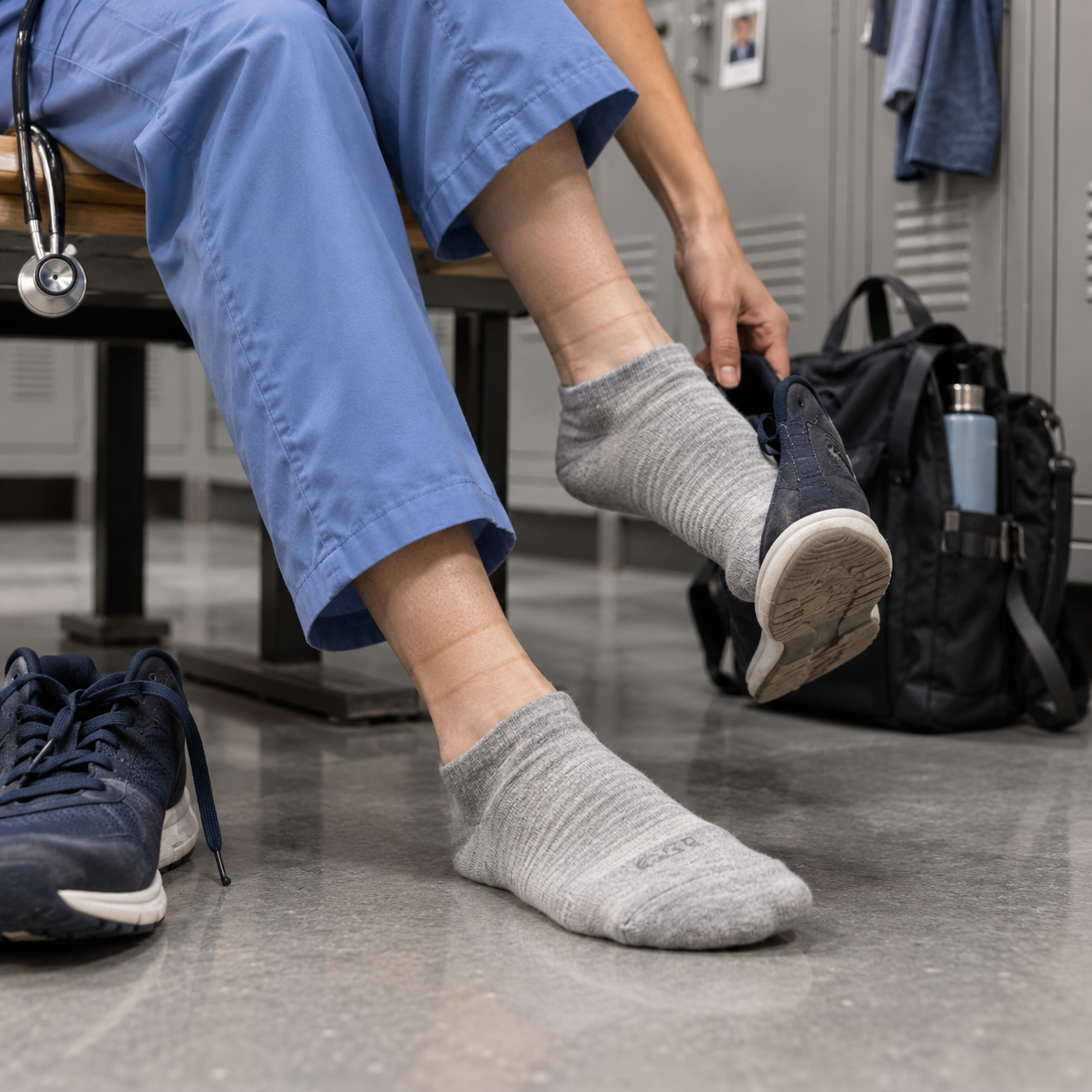
A $150 work shoe and a $3 pair of socks are spending 12 hours together. That imbalance deserves a second look.
If you work in healthcare, you have probably spent real money on shoes. You have done the research. You have read the reviews from other nurses. You know the brands that hold up over a long shift and the ones that do not. That research took time and effort, and it was worth it.
Now think about the last time you applied that same level of thought to socks.
For most nurses, the honest answer is never. Socks come in multipacks. They are bought in bulk. They are replaced when they wear out. The idea of choosing socks the way you choose work shoes simply has not come up.
But your shoe and your sock are doing the same job for the same 12 hours. The shoe protects you from the ground. The sock sits directly against your skin. If you are serious about comfortable footwear for a long shift, stopping at the shoe is stopping halfway.
"Better workday comfort does not stop at the shoe. The layer touching your foot for 12 hours deserves the same attention you gave your footwear."
The end-of-shift moment tells you everything
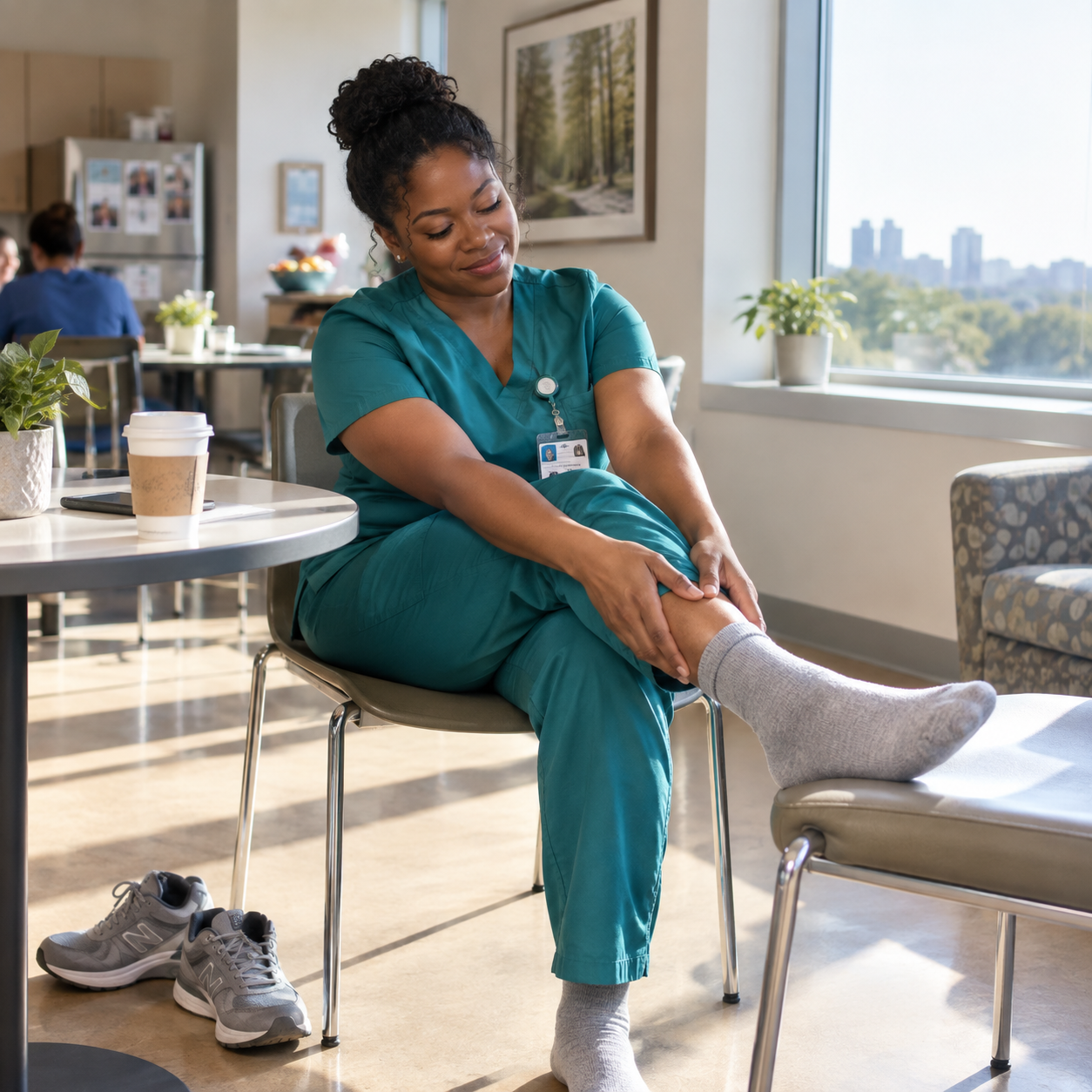
The first thing you do when you get home after a long shift is probably not a coincidence. It is feedback.
Most nurses know this feeling: you get home after a 12-hour shift and the first thing you do, before you change, before you eat, sometimes before you even sit down, is pull your shoes off. And the socks come off right after, because having them on for one more second feels unnecessary.
That moment is worth paying attention to. It is your feet telling you how the last 12 hours went at the most direct level of feedback available. Tired is normal after a long shift. But the specific discomfort of wanting to rip your socks off the moment you walk through the door suggests the sock itself became part of the problem somewhere during the day.
Nurses who have started wearing HappyFeet describe a small but genuine shift in that end-of-day experience. Their feet are still tired. Long shifts are still long. But the specific irritation of the sock, the tight cuff, the roughness, the heat, is less of a factor. Some describe it as one fewer thing to recover from when they get home.
That is why nurses are switching to HappyFeet Bamboo Comfort Socks
A comfort-first sock designed for extended everyday wear. Soft, roomy, and less restrictive around the ankle. Built for people who spend hours on their feet.
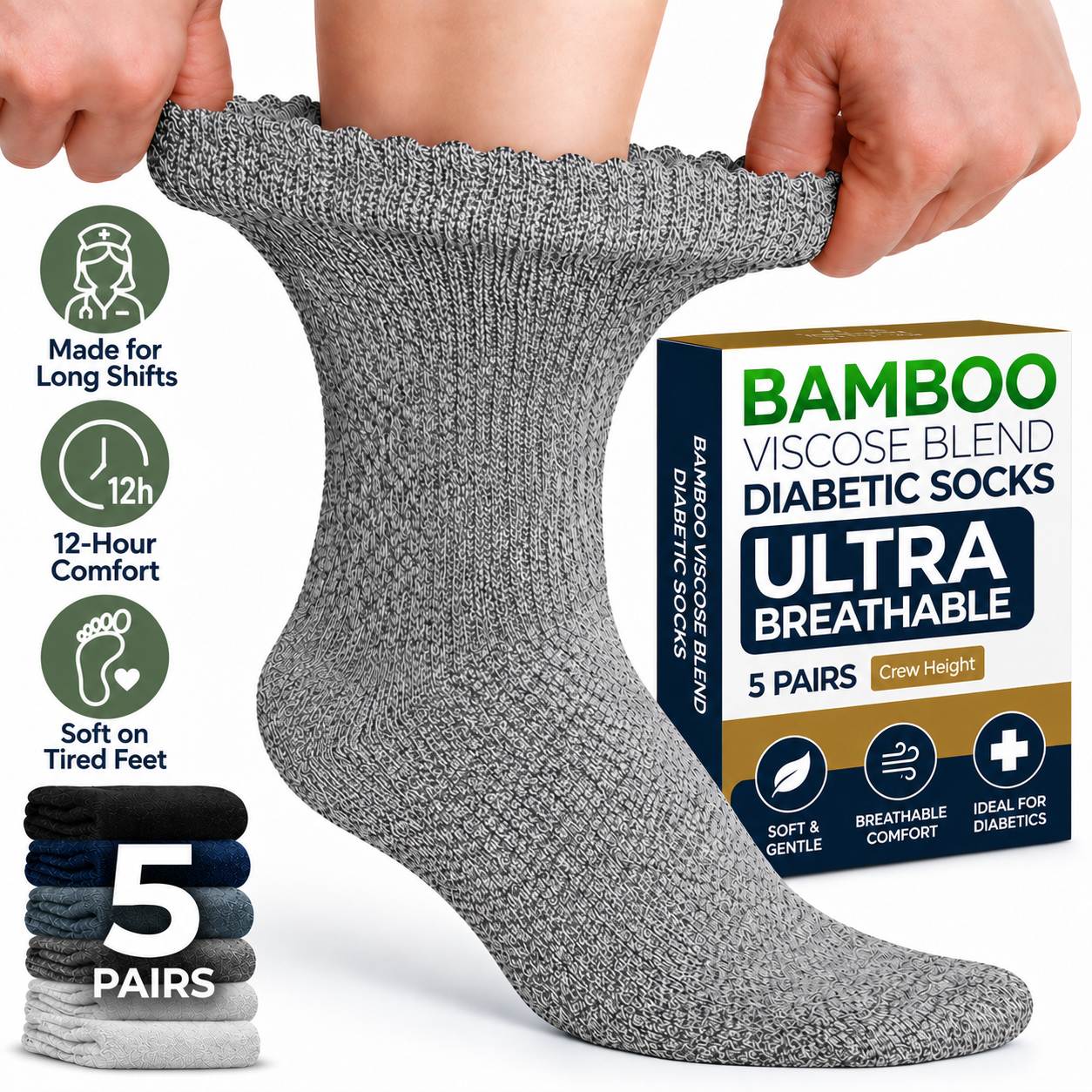
HappyFeet takes a comfort-first approach with a soft bamboo fabric, a less restrictive ankle cuff, and a roomy flexible fit that is designed to stay comfortable from the beginning of a shift to the end.
What makes HappyFeet different for long shifts
- Soft bamboo fabric that stays gentle against skin throughout the day, not just in the morning
- Less restrictive ankle cuff designed to reduce that tight, gripping sensation by midshift
- Roomy, flexible fit that accommodates your foot without bunching inside your work shoe
- Breathable material that helps manage heat inside closed nursing footwear
- Comfortable from hour one through hour twelve, not just until your first break
- No harsh seams that register against tired skin after thousands of steps
- Designed for extended everyday wear by people who spend long periods standing and walking
- An easy, everyday upgrade that does not require changing anything else about your routine
What healthcare workers are saying
"I was honestly skeptical because I have tried a lot of socks and they all feel the same to me after a few hours. But these are genuinely different. The cuff does not grip my ankle the way my other ones do. I got through a 12-hour shift and did not adjust my socks once. That probably sounds like a small thing but for me it is not."
"My feet still hurt at the end of a long shift because that is just what long shifts do. But there is less of that burning sock-mark feeling when I take them off. I have been buying cheap multipacks forever and these are the first socks I have ever actually noticed in a good way."
"The softness is real. I put them on and my first thought was that they felt completely different to every other pair I own. I have been wearing them for three weeks now, mostly on my long clinic days. They are comfortable all day and they do not get that rough scratchy feeling that some of my cotton socks get by afternoon."
"I spend most of my day on my feet visiting clients. I was recommended these by a colleague and I bought one pair to try before committing. I ended up ordering more the same week. They are roomier than my old socks and my feet just feel better inside my work shoes. Simple as that."
"I spent about $160 on my nursing shoes last year. I had never spent more than maybe a few dollars on socks. A friend kept telling me to try these and I finally did. I can not believe the difference a sock makes. Less tight around the ankle, softer material inside the shoe. I ordered a bunch of pairs and I am not going back."
Demand from healthcare workers has increased significantly. This promotional offer may not last.
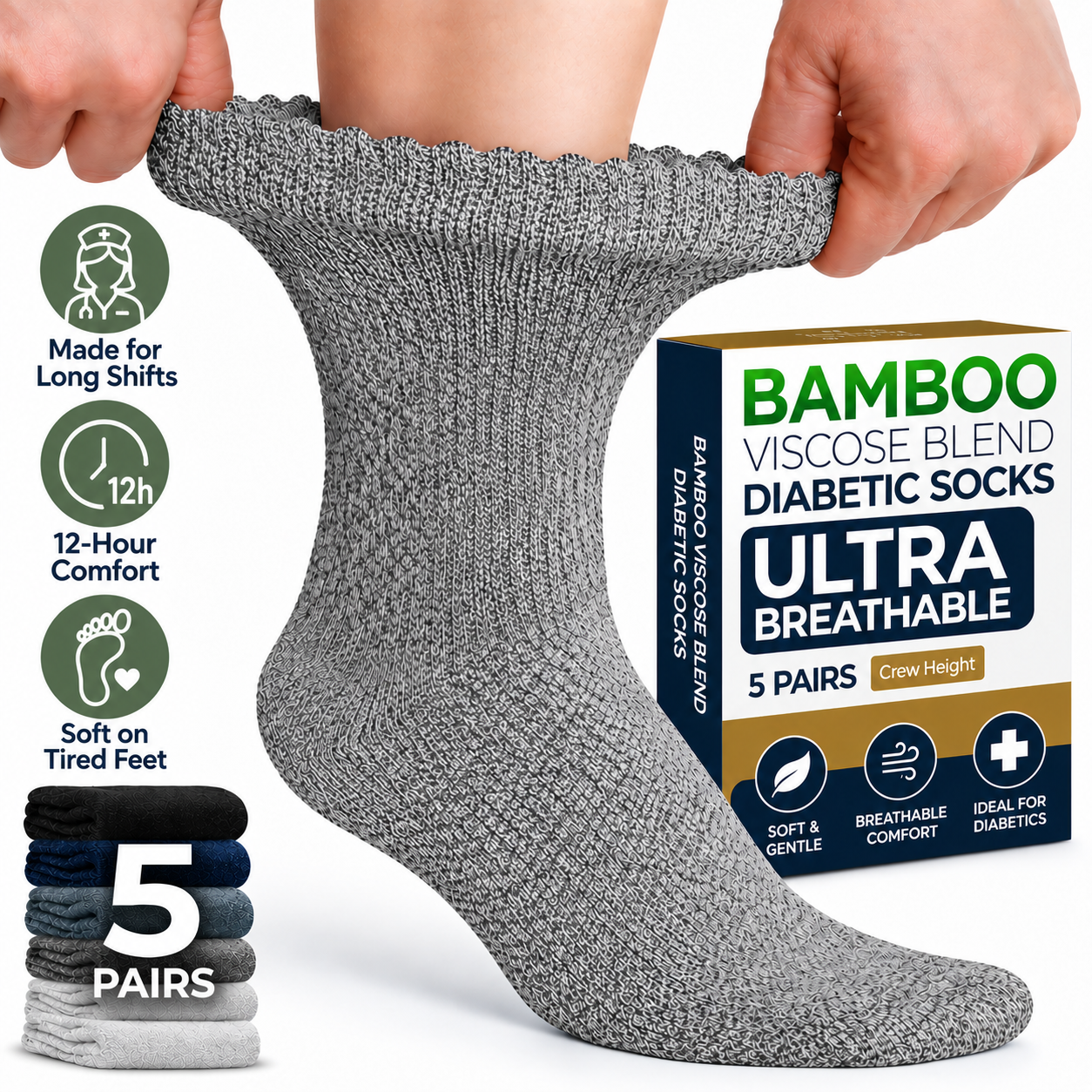
If HappyFeet Bamboo Socks are not the most comfortable socks you have worn on a long shift, return them. No complicated process. No hassle. That is how confident we are that you will notice the difference.
Stock of the Buy 1 Get 5 promotional offer is limited. This deal ends when current inventory is gone.
CLAIM YOUR 6 PAIRS NOW: SAVE UP TO 65% OFFLoved by nurses, caregivers and healthcare workers who spend their days on their feet.