Hotel-Bed Comfort Explained: “This Is the Simplest Way to Make Your Own Bed Feel as Comfortable as a Good Hotel Bed Without Buying a New Mattress”
Why some hotel beds feel so remarkably comfortable the moment you lie down, and the practical surface change many adults are making before spending thousands on a replacement mattress.

That feeling of sinking into a genuinely comfortable bed, something many adults say they experience more reliably when travelling than at home.
If you have ever checked into a hotel, pulled back the covers, and thought: why can't my bed at home feel like this...
If you have lain awake some nights shifting your weight, moving to your other side, or wedging a pillow under your hip to get comfortable on a surface that just never quite cooperates...
If you sleep reasonably well on holiday but come home to a bed that feels harder, flatter, or just more resistant than you remember it being...
Then I want you to read the next few minutes carefully.
Because I think most people are asking the wrong question when they notice that gap.
The usual conclusion is a simple one.
My mattress is old. I need to replace it.
And sometimes that conclusion is correct.
But before making that investment, there is another possibility worth considering.
The most important variable in bed comfort is often the surface you are actually sleeping on, and that is not always the mattress itself.
A more comfortable bed can start with a smaller change.
At Home & Garden Trends, our focus is helping you understand your bedding options so you can make a practical choice for your home.
If your own bed feels less comfortable than a bed you enjoyed while travelling, it is natural to wonder whether you need a new mattress. The first step is to separate a worn support system from a surface that simply feels too firm.
Before replacing the whole mattress, it can be worth testing the simplest variable: the cushioning on top.
THE QUESTION THAT STARTED THIS LINE OF THINKING...

Many adults notice the difference clearly when staying away from home. The question worth asking is what, specifically, creates that difference.
Think about the last time you slept in a hotel bed that genuinely felt comfortable.
Not a budget room. A decent bed. The kind where you pulled back the covers, settled in, and within a few minutes felt your shoulders relax and your hips find a natural position.
Now think about what that surface actually felt like under you.
It almost certainly had some give to it. Not so soft that you felt you were sinking without support. But cushioned enough that the pressure on your hips and shoulders was noticeably reduced compared to a firmer surface.
That is not an accident.
Hotel beds in that comfort tier are typically built with a meaningful comfort layer on top of their support core. Some use a dedicated topper. Others build it into the mattress construction itself.
Either way, the effect on the person lying in the bed is the same: the surface gives a little where the body needs it most.
Now think about your own bed at home.
If your mattress is more than a few years old, that comfort layer, if it had one, has likely compressed. What remains is the firmer support structure underneath. That is what your hips and shoulders are resting against each night.
And that is a very different surface from the one you remember when the mattress was new, or the one you experienced in that hotel room.
THE VARIABLE MOST PEOPLE OVERLOOK BEFORE REPLACING A MATTRESS
I want to be clear about something important.
If your mattress is genuinely worn out, sagging significantly, or structurally compromised, replacing it is the right decision. A mattress topper cannot fix a broken support system underneath.
But there is a narrower, and I think more common, situation worth examining first.
The mattress underneath is still fundamentally sound. What has changed is the surface.
The original comfort layer has compressed with use. What felt supportive and cushioned when the mattress was new now feels harder and less forgiving. The hips and shoulders, which need a surface that gives a little to distribute pressure, are now resting against something much more resistant.

The mattress underneath may still be structurally sound. What has often changed is the surface layer that your body actually rests against each night.
The question worth asking before spending two thousand dollars or more: is the problem the entire mattress, or is it the surface you have been sleeping on for the past several years?
That is a much smaller experiment to run.
And it is one that many adults, once they understand it, wish they had tried sooner.
WHAT MAKES A SLEEP SURFACE FEEL GENUINELY COMFORTABLE
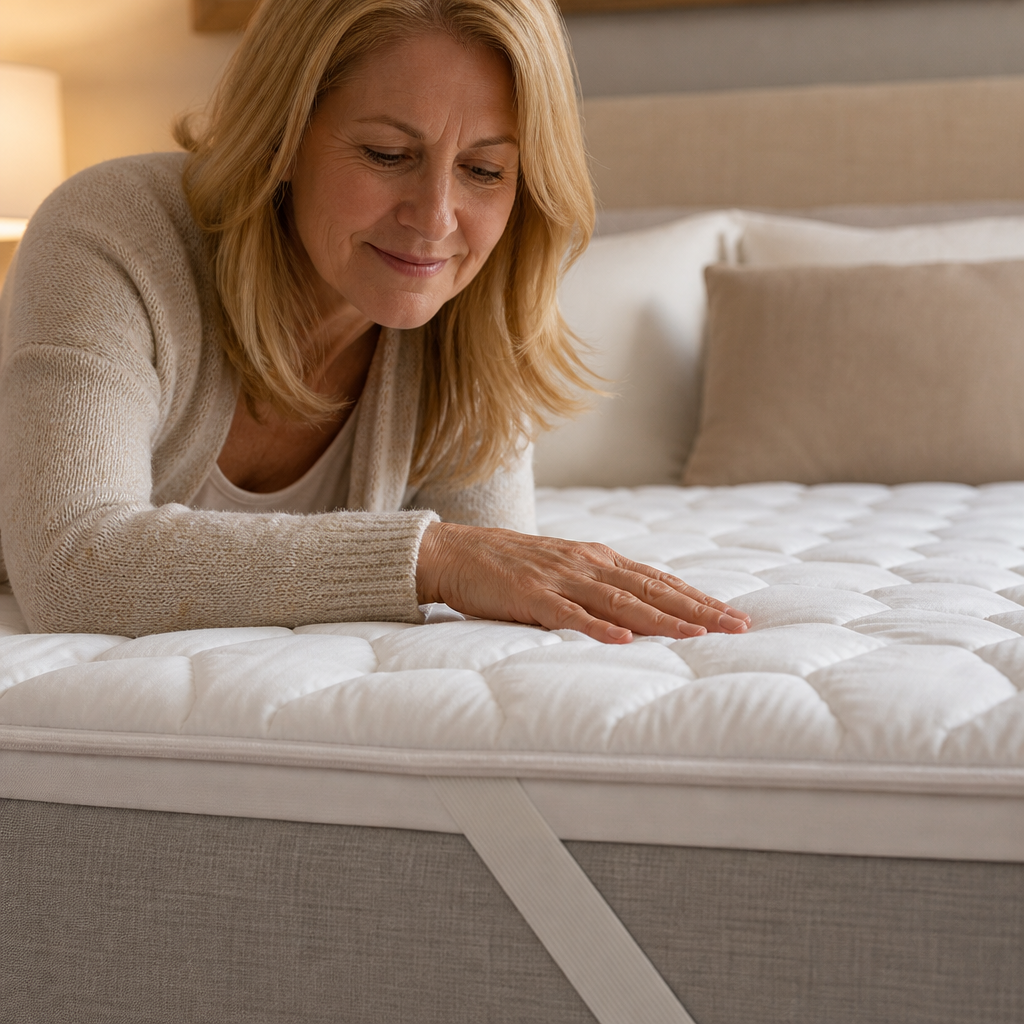
When a sleep surface has adequate cushioning, body weight distributes more evenly. Hips and shoulders find a natural resting position rather than pressing against a resistant surface.
Think about what happens when you press your hand firmly onto a hard table.
All of the pressure concentrates in the small area of contact. The bones of your knuckles and the heel of your hand take the full load.
Now press your hand into a folded towel on that same table.
The pressure spreads. The same weight is distributed across a wider surface. The concentrated feeling at the contact points is noticeably reduced.
That is essentially what a comfort layer does for the body during sleep.
Your hips, shoulders, and lower back are the areas with the most bony prominence, the places where pressure concentrates most when you lie on a firm surface. A cushioning layer gives those areas somewhere to settle, distributing body weight rather than concentrating it at those contact points.
When that distribution works well, most people find it easier to settle into a comfortable position and stay there.
When it does not work well, because the surface is too firm or the comfort layer has worn flat, those pressure points make themselves known. You shift. You reposition. You end up waking more tired than you expected after a full night's sleep.
That pattern, sleeping for seven or eight hours and still feeling unrested, is one of the most common things I hear from adults whose mattress comfort has quietly declined over time.
WHY REPLACE A WHOLE MATTRESS BEFORE TESTING THE SURFACE FIRST?
A new mattress is a significant experiment.
You can spend one thousand, two thousand, sometimes considerably more. You wait for delivery. You adjust to something unfamiliar. And then, a few weeks later, you discover whether it actually feels better at two in the morning when you are lying on your side trying to find a comfortable position for your hip.
Many people find the new mattress does help. Some find it does not feel as different as they hoped. A few find it feels great for a few months before the same gradual compression begins again.
What most of them had not tried first was much simpler.
Add a quality comfort layer to the surface they already own and sleep on that for a few weeks before making a much larger decision.
The support structure underneath stays exactly as it is. The surface that the body actually rests against changes immediately.
It is a smaller commitment, a faster answer, and in many cases, it turns out to be the only change needed.
THAT QUESTION LED ME TO ORTHOBED
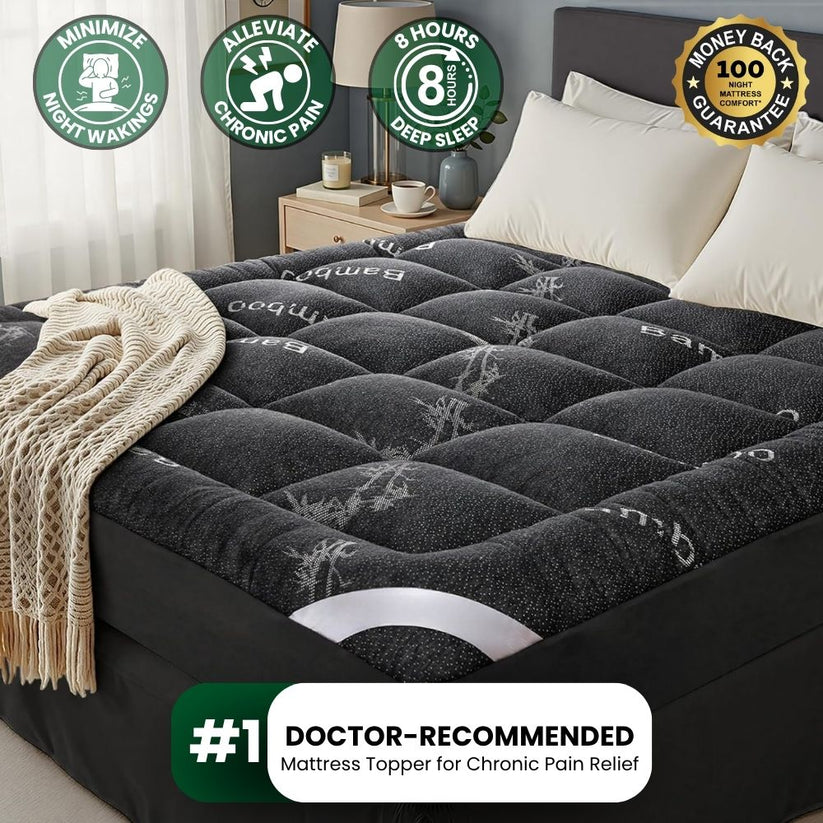
That question eventually led me to OrthoBed, a mattress topper from Home & Garden Trends designed to add a meaningful comfort layer on top of the mattress you already own.
The idea is straightforward: add cushioning above a mattress that still provides adequate support. It does not ask you to replace your mattress. It asks you to change the surface, test it for one hundred nights, and decide from there.
The construction is straightforward and worth understanding before you decide whether it might suit your situation.
- High-density orthopedic foam base layer for underlying support
- Pressure-relief comfort layer designed to cushion hips, shoulders, and lower back
- Body-responsive support zones that help distribute weight more evenly across the surface
- Breathable cover to reduce heat retention during the night
- Anti-slip backing to keep the topper in place on your existing mattress
- Universal sizing to fit standard mattress sizes
- 100-night money-back trial
HERE'S EXACTLY WHAT ORTHOBED CHANGES WHILE YOU SLEEP
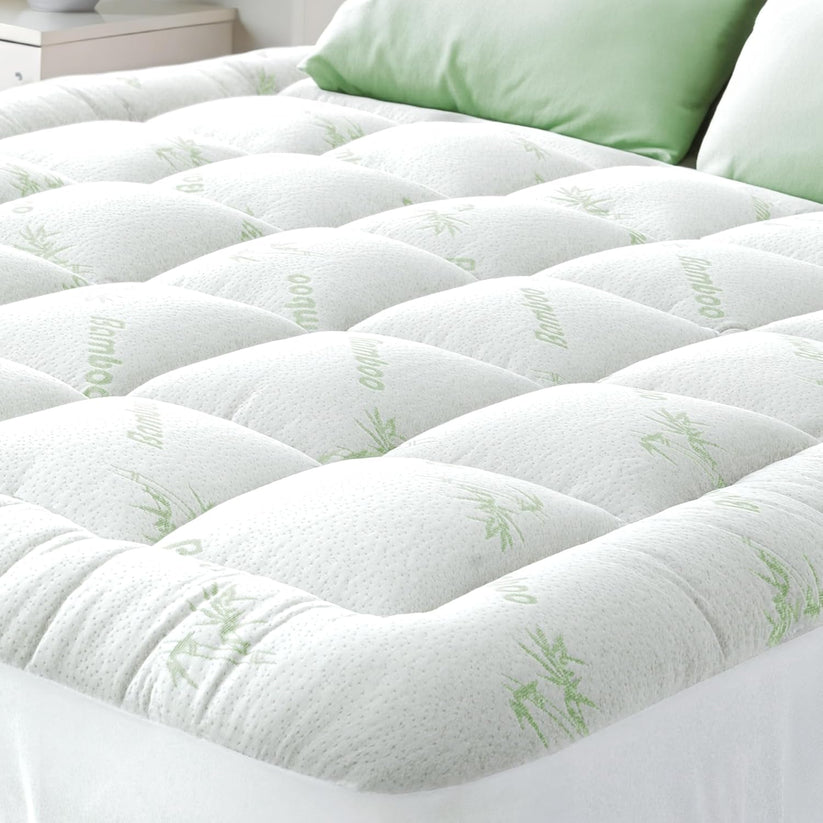
Here is how I think about what OrthoBed actually does for you during the night.
I am not asking you to believe it somehow transforms your mattress into something entirely new.
I am asking you to change the surface your body rests against for the next seven or eight hours, then judge for yourself what that means for your nights at home.
WHEN YOU FIRST LIE DOWN: THE CUSHIONING PHASE
The OrthoBed pressure-relief comfort layer sits between your body and the firmer support structure underneath.
That cushioning matters most where the body carries its weight: the hips, the shoulders, and the lower back. Instead of pressing directly against a compressed or firm mattress surface, those areas settle into something that gives a little. The same feeling, in a smaller way, that made the hotel bed feel so noticeably good.
AS YOU SETTLE IN: THE POSITIONING PHASE
Finding a comfortable position on a firm or worn surface often means constant small adjustments. One side feels fine for a few minutes, then the hip starts protesting. You roll. You shift. You try a different arrangement.
A more forgiving surface gives your body a better starting point. The high-density orthopedic foam base keeps the support underneath stable while the comfort layer absorbs the pressure at the contact points that usually cause the most trouble.
THROUGH THE NIGHT: CUSHIONING ON TOP, SUPPORT UNDERNEATH
OrthoBed does not replace the mattress below it. It sits on top of it, held in place by the anti-slip backing.
If your mattress is still structurally sound but the top layer has worn flat over the years, that underneath structure stays exactly as it is. What changes is the part of the bed your body actually touches all night. That is often the variable worth testing first, before committing to something much larger and more expensive.
WHEN YOU CHANGE POSITIONS: A MORE FORGIVING LANDING
Most adults shift position several times during the night without fully waking. Each turn brings the hip or shoulder against the mattress surface from a slightly different angle.
The body-responsive support zones in OrthoBed are designed to distribute that weight more evenly across the surface, so repositioning is less likely to meet a concentrated pressure point. The goal is a surface that cooperates rather than resists.
BY MORNING: WHAT YOU ARE ACTUALLY JUDGING
Not whether a topper replaced the experience of a brand-new mattress.
You are looking for practical, honest differences: Did the bed feel less harsh around the hips and shoulders? Was it easier to settle into a position and stay there? Did you spend less of the night fighting the surface? Does getting up feel like less of an effort? Those are the right questions for a 100-night trial.
THE DETAIL THAT MADE ME TAKE THIS SERIOUSLY
“The goal of a topper is to make your sleep surface more comfortable.” — Sleep Foundation, Mattress Topper Research Methodology. Its testing guidance also explains that cushioning needs depend on sleep position and the mattress underneath. This general guidance is not an endorsement of OrthoBed.
When I looked at published guidance on sleep comfort and mattress feel, the consistent theme was that the surface layer, not always the mattress as a whole, is the variable most worth examining when a bed starts feeling less comfortable than it once did.
That is the role OrthoBed is designed for: changing the sleep surface and the pressure it creates, not claiming to treat any medical condition.
What I Want You To Notice Each Morning
- A softer, more cushioned top layer over the mattress you already own
- Reduced pressure around the hips, shoulders, and lower back
- A surface that makes settling into a comfortable position less of a negotiation
- The ability to change how your bed feels without replacing what is underneath
- 100 nights to decide honestly whether the difference is meaningful for you
Let Me Show You What Chasing Bed Comfort REALLY Costs:
The New Mattress Route:
- Many quality queen mattresses fall around $800 to $2,000, sometimes considerably more
- Premium models with built-in comfort layers can climb well past that
- You make the decision based on a few minutes in a showroom, then discover how it feels at 2am after a week at home
- Sleep Foundation’s mattress cost guide lists mid-range mattresses at $500–$1,500 and luxury models at $1,200–$3,000+, with queen-size averages of $1,000 and $1,800 respectively. Prices vary by model, size and retailer.
The Cheap Foam Topper Route:
- Budget toppers are widely available for $30 to $80
- Most compress quickly and lose their shape within a few months
- No orthopedic design, no body-responsive zones, no meaningful pressure relief
- Many users report heat retention and chemical odors from low-density foam
The Specialist Consultation Route:
- MDsave’s published marketplace averages are $222 for a new-patient sleep medicine office visit and $277 for a new-patient orthopedic office visit. These are examples of separate visit types, not a quote for your care; insurance, location, testing and follow-up can change your cost.
- Useful when the problem is medical. Less useful when the problem is simply a worn sleep surface
- Does not change what you lie on when you get home that evening
The "Do Nothing and Hope It Improves" Route:
- No financial cost up front
- Ongoing cost: waking up stiff, unrested, and dreading the morning before the day has started
- The mattress surface does not improve on its own. A compressed comfort layer stays compressed
And this is the part that started to seem backwards to me.
Not because new mattresses or specialist advice are never worthwhile. Sometimes they absolutely are the right answer.
But if the problem is a sleep surface that has simply lost its cushioning over time, replacing the entire mattress is a very expensive first experiment when a surface change has not yet been tried.
WHEN A SIMPLE COMFORT UPGRADE COMPETES WITH A MULTI-BILLION-DOLLAR MATTRESS MARKET

The difference between dreading the morning and looking forward to getting out of bed is often smaller than people assume.
The mattress industry in America is a large, well-funded market.
Showrooms. Trials. White-glove delivery. Financing options. The message is consistent: when your sleep is suffering, the solution is a new mattress.
That message is not always wrong. Sometimes a mattress genuinely needs replacing.
But there is an obvious commercial reality worth acknowledging:
The industry profits most from selling you the whole thing. A surface change on what you already own does not generate nearly the same return.
I am not suggesting a conspiracy. I am suggesting a straightforward question worth asking before spending two thousand dollars:
Have you tested what happens when the surface itself changes?
- Adds a meaningful cushioning layer where hips, shoulders, and lower back meet the mattress
- Works during the seven or eight hours your body is actually in contact with the surface
- Lets you change how the bed feels without discarding the mattress underneath
- Costs considerably less than most quality replacement mattresses
- Gives you 100 nights to decide whether the change is genuinely meaningful for your sleep
That is the question the expensive routes cannot answer for you in advance:
What happens to your nights when the surface you have been lying on becomes genuinely comfortable again?
THE RESULTS THAT MATTER HAPPEN BETWEEN BEDTIME AND MORNING
The multi-layer construction is the part worth understanding: cushioning on top, orthopedic support below, working together rather than making you choose between them.
What the trial is honestly designed to test
OrthoBed's three-layer construction addresses three separate variables in one surface change: the high-density orthopedic foam base provides stable underlying support; the pressure-relief comfort layer cushions the contact points where body weight concentrates; and the body-responsive support zones distribute that weight more evenly across the surface.
Those are verified product features, not medical claims. The trial is designed so you can judge their practical effect in your own bed, on your own sleep schedule, over 100 nights.
So what do I want you to actually notice during the 100-night trial?
- Does the bed feel noticeably more cushioned around the hips and shoulders from the first night?
- Is it easier to find a comfortable position and stay in it without constant adjusting?
- Does the surface feel more similar to the hotel beds you have found comfortable when travelling?
- Do you spend less of the night aware of the mattress underneath you?
- Does getting out of bed in the morning feel less effortful than it has been?
And before I ask you to try it, here is what real OrthoBed customers are actually saying:
“The padding is soft, & fluffy. It was easy to put on as the bottom is stretchy almost like a fitted sheet.” — John Smith
“Unboxed it, let it expand overnight, and it was ready to go. Fits my queen bed with no problem. No weird smells either, which is a big plus.” — Brent
“The mattress was stupid expensive so replacing it wasn’t an option. I thought I would try a mattress topper, and bought this one. WHAT A DIFFERENCE!!” — Josh
Sleep Foundation’s topper-testing guidance explains that side sleepers often need cushioning around the shoulders and hips, while firmness and support needs vary with body weight and sleeping position. Read the testing guidance. This is a summary of published category guidance, not a professional endorsement of OrthoBed.
THE UP-TO-61%-OFF CASE FOR TRYING THE SURFACE BEFORE THE MATTRESS
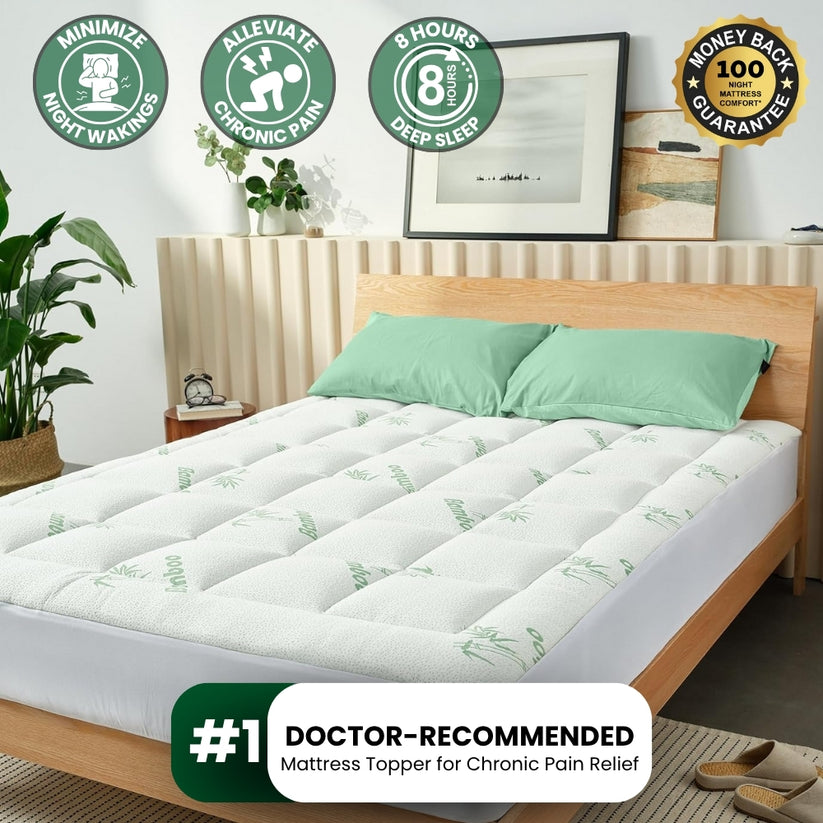
Here is why I think the numbers make a compelling case for trying this first.
Replacing a quality mattress comfortably runs into the hundreds or thousands of dollars, and you will not know whether it feels right until you have been sleeping on it for a week at home.
Cycling through budget foam toppers that compress after a few months is a slow accumulation of frustration and modest expense.
OrthoBed sits between those two options in a practical way.
It is not a cheap foam slab. It is a three-layer orthopedic construction designed to address pressure relief and support simultaneously. And it comes with a trial long enough to give you a genuine answer.
- Considerably less than the typical cost of a quality replacement mattress
- Far less than the cumulative cost of cycling through budget toppers that do not last
- A fraction of what a showroom visit and delivery cycle costs in time and uncertainty
- And you test it on the mattress you already own, in your own bedroom, on your own schedule
Not a new mattress commitment. Not a showroom gamble. A 100-night surface test on a bed you already know.
I am not asking you to believe OrthoBed will feel exactly like every hotel bed you have ever loved. Hotel beds vary, and a topper cannot fix every mattress problem.
I am asking a more honest question: what if the bed you already own just needs a better surface on top of it?
CHECK AVAILABILITY NOWTHE CHOICE THAT COULD CHANGE YOUR NEXT 100 NIGHTS AT HOME
Looking forward to getting into your own bed at the end of the day. That is the practical goal here, not a medical outcome.
I understand the hesitation.
You have probably tried things before that sounded reasonable and ended up sitting unused in a cupboard. A pillow that promised everything. A mattress in a box that felt great for three months. Something you bought after a particularly bad night that did not make the difference you hoped.
So here is the commitment I am comfortable with:
Put OrthoBed on the mattress you already own and give yourself up to 100 nights to judge the difference honestly.
Judge the things that actually matter on an ordinary Tuesday night at home:
- Does the bed feel less hard against your hips and shoulders?
- Is settling into a comfortable position less of a process?
- Do you spend less of the night aware that you are lying on something resistant?
- Does getting into bed feel like something to look forward to again?
If the answer is yes: keep sleeping on it. You have changed the most important variable for considerably less than a new mattress costs.
If the answer is no: check the current 100-night money-back guarantee terms on the product page and use them. The trial exists precisely for this.
THE 100-NIGHT "MAKE YOUR OWN BED FEEL COMFORTABLE AGAIN" GUARANTEE
I do not want you to decide this is the missing piece because of an article.
I want you to decide after sleeping on it, in your own home, on your normal schedule.
One night is not enough to know. A few weeks gives you ordinary nights, different seasons of sleep, and enough honest mornings to judge whether the surface change is genuinely meaningful for you. That is why the trial is 100 nights and not 30.
Check the live product page for current guarantee terms and return conditions before ordering.
CHECK AVAILABILITY NOWWhat OrthoBed Customers Say
“The padding is soft, & fluffy.” — John Smith
“Fits my queen bed with no problem. No weird smells either, which is a big plus.” — Brent
Customer review excerpts above are reproduced from the OrthoBed product-page reviews. Excerpts are shortened; individual experiences vary.
Common Questions
Will OrthoBed fit my existing mattress?
OrthoBed is designed with universal sizing to fit standard mattress sizes. Select the size that matches your current mattress when ordering, and the topper sits directly on top of it. The anti-slip backing keeps it in place during the night.
Will it slide around while I sleep?
OrthoBed has an anti-slip backing designed to keep it stable on the mattress surface underneath. It does not require straps or clips for standard use, though very slippery mattress covers occasionally affect grip. If that is a concern for your specific mattress, check the product page for further fitting guidance.
Will it make the bed too soft?
OrthoBed is designed to add cushioning without removing support. The high-density orthopedic foam base maintains a stable underlying structure while the pressure-relief comfort layer softens the feel at the surface. The goal is a surface that gives where the body needs it, without the unsupported sinking feeling of a very soft foam pad.
Can a topper actually make a meaningful difference to an older mattress?
It depends on what has changed about the mattress. If the support structure underneath is still fundamentally sound but the surface layer has compressed over time, adding a fresh comfort layer on top can make a noticeable difference to how the bed feels. If the mattress is sagging, structurally compromised, or heavily damaged, a topper cannot compensate for that. OrthoBed includes a 100-night trial so you can judge for yourself whether the change is meaningful in your specific situation.
How long does OrthoBed take to fully expand after delivery?
Check the current product page for the recommended expansion time, as compressed toppers typically need a period of several hours to reach their full thickness. Allow the topper to fully expand before sleeping on it for the first time.
What is included in the 100-night trial?
The 100-night money-back trial allows you to test OrthoBed in your own home and return it if you are not satisfied, subject to the conditions listed on the product page. Check the live product page for current guarantee terms, return process and any conditions that apply before ordering.
Does OrthoBed retain heat during the night?
OrthoBed includes a breathable cover designed to reduce heat retention. Heat retention is a common complaint with lower-density foam toppers. If temperature is a particular concern for you, the product page has further detail on the cover construction and materials.
How do I care for OrthoBed?
Check the care instructions on the product page or inside the packaging for specific guidance. Generally, foam toppers should not be machine washed. The cover, if removable, may have its own care instructions. Keep OrthoBed away from prolonged direct moisture to maintain its structure.
Sleep Foundation — Mattress Topper Research Methodology: https://www.sleepfoundation.org/research-methodology/mattress-topper. General information on cushioning, firmness and pressure relief; not product-specific evidence or an OrthoBed endorsement.
Sleep Foundation — How Much Does a Mattress Cost?: https://www.sleepfoundation.org/mattress-information/how-much-does-a-mattress-cost. Published category ranges and queen-size averages. Consultation examples: https://www.mdsave.com/t/wellness/office-visits. Sources accessed November 8, 2026.
OrthoBed product page: verified product features including high-density orthopedic foam base, pressure-relief comfort layer, body-responsive support zones, breathable cover, anti-slip backing, universal sizing and 100-night trial.
https://homegardentrend.com/products/orthobed