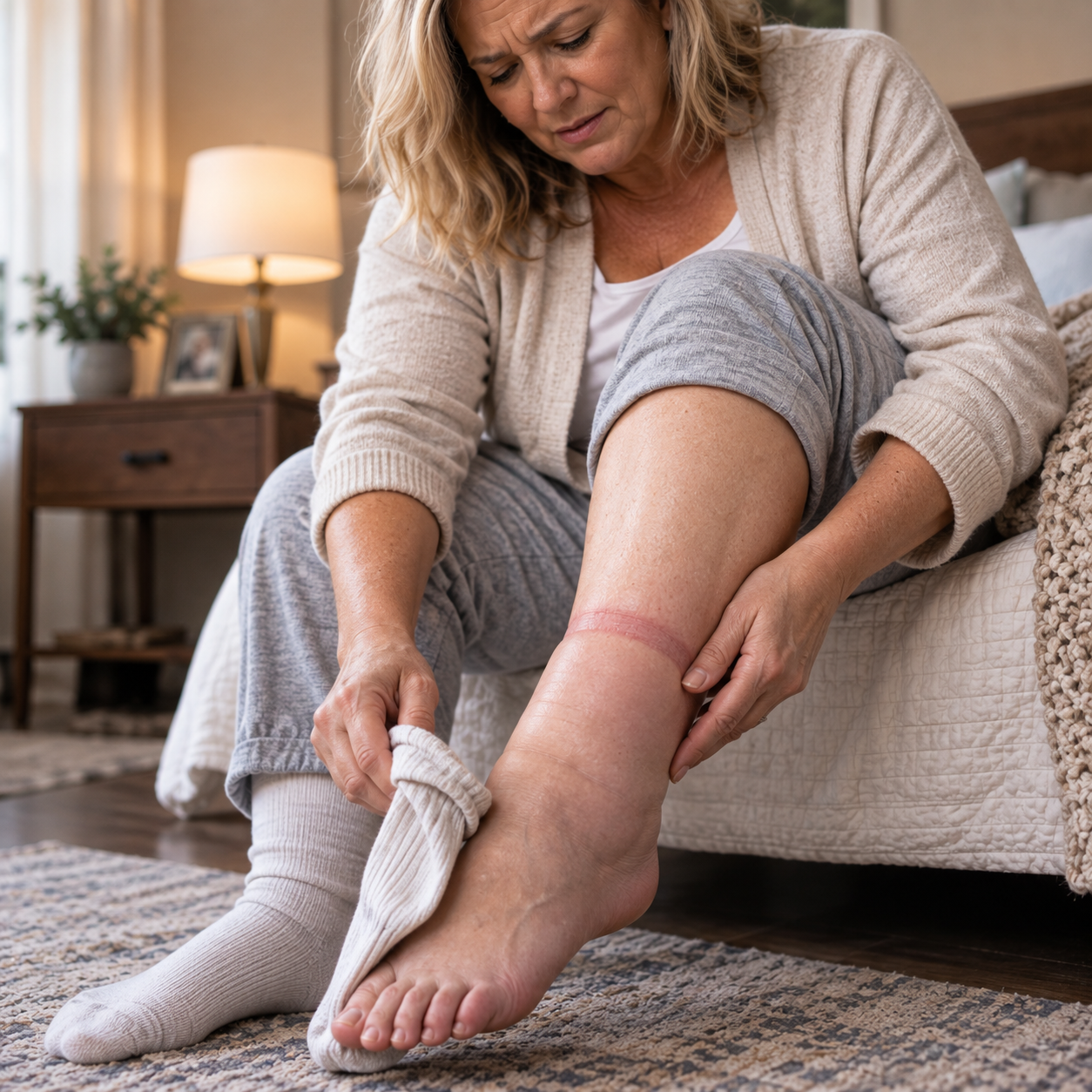
You reach down at the end of the day, peel off your socks, and there it is.
That deep, indented ring around your ankle. The kind that takes a good twenty minutes to fade. You press your finger into it and the mark holds its shape for a moment before slowly filling back in.
It doesn't hurt exactly. But it doesn't feel right either.
And the strange thing is, your socks felt perfectly fine when you put them on this morning.
If you're a woman over 45 and this is a scene you recognize, you are far from alone. In fact, for millions of women in this age group, the combination of changing body chemistry and ordinary sock design creates a daily discomfort that builds gradually and quietly throughout the day, and only becomes obvious when the socks finally come off.
This article is going to explain exactly what's happening and why, and then introduce a sock design specifically built around this problem.
It Starts Innocently Enough in the Morning
You pull your socks on and they feel fine. Maybe even a little loose. You go about your morning, run your errands, stand in the kitchen, sit at your desk, or spend hours on your feet at work.
But somewhere around mid-afternoon, something shifts.
Your shoes feel slightly tighter than they did at 9 AM. You notice a faint pressure around your ankle where the sock cuff sits. You flex your foot and it feels a little different than it did a few hours ago.
By evening, that sock cuff has gone from barely noticeable to distinctly uncomfortable. You've been shifting your foot inside your shoe, pulling the sock up, or trying to relieve the pressure in little ways all day. And all you really want to do is get home and get those socks off.
Does this sound familiar?
Women dealing with this describe the progression like this:
- Socks feel loose and comfortable in the morning
- Ankles become noticeably puffier as the day goes on
- Shoes start to feel tighter by early afternoon
- The sock cuff begins to dig in by late afternoon or evening
- A visible, indented ring is left around the ankle when socks come off
- The relief of removing socks becomes something to look forward to all day
If three or more of those describe your experience, keep reading.
Why This Gets Worse as the Day Goes On
Here's what's happening. Many women, particularly from their mid-forties onward, experience natural changes in how their bodies manage fluid. Feet and ankles that were a consistent size in the morning can be noticeably different by afternoon, especially after prolonged standing, sitting, or a warm day.
This is not unusual. It is not a medical emergency. And it is not something most women give much thought to, until it starts affecting how their socks feel.
Because here's the problem: your socks were not designed for this.
"Most standard socks are engineered for a foot and ankle that stays the same size throughout the day. They use a tight elastic cuff to stay in place. That's a reasonable design if your ankles never change. But for many women over 45, that's simply not reality."
As your ankles become puffier during the day, that elastic cuff is working against you. It was tight when you put it on. Now, with more ankle filling that space, it feels even tighter. By evening, what started as a gentle grip has become a band of pressure you can't stop noticing.
The "Sock Ring Effect": Why the Real Problem Isn't Your Ankles
There's a name for what's happening here. We call it the Sock Ring Effect.
It's the result of a design mismatch: ordinary socks rely on a firm, tight elastic cuff to stay on the foot. That cuff is sized for a standard ankle at a standard size. But many women's ankles fluctuate throughout the day, expanding by late afternoon due to a combination of factors including prolonged standing, sitting in one position, warm weather, and the natural fluid shifts that become more common with age.
The sock doesn't adapt. The ankle does. And as the ankle fills the cuff more and more, that tight elastic band begins to feel increasingly restrictive.
The Sock Ring Effect isn't about weak ankles or a medical condition. It's about a design problem. You've been wearing socks built for feet that never change throughout the day. And if your feet do change, you were never the right customer for those socks.
"The problem isn't that you have swollen ankles. The problem is that you've been wearing socks designed for ankles that never swell."
The Workarounds That Don't Really Work
Most women who deal with this have already tried the obvious fixes. They're smart, practical women who don't sit with a problem when there's something to try. But every workaround has a catch.
Common workarounds, and why they fall short:
- Buying larger socks: Helps a little, but the elastic cuff is still elastic. A bigger sock with the same cuff design still tightens as ankles swell.
- Stretching the cuffs by hand: Works temporarily, but elastic springs back. Within a few washes, you're back to the same tight grip.
- Folding the cuff down: Creates a double layer of fabric bunched around the ankle, which is often just as uncomfortable in a different way.
- Removing socks the moment she gets home: Relief for the evening, but not a solution for the hours before that.
- Trying generic "loose" socks: Often too loose to stay in place, slipping down inside shoes and causing a different frustration entirely.
Linda, 52, from Ohio, describes the cycle well:
"I bought three different brands in the last year, all in larger sizes. They'd feel okay in the morning and then by the time I picked my grandkids up from school I'd be sitting in the car just wanting to take them off. I'd stretch the tops before I put them on each morning. It made no difference after a few hours."
Linda's experience isn't unusual. The workarounds share a common flaw: they're still applying sock design logic that was never built with fluctuating ankle size in mind.
The Sock That Was Built for the Way Ankles Actually Behave
After years of workarounds and frustration, the solution turned out to be refreshingly straightforward: stop designing socks for ankles that never change size.
That's the thinking behind HappyFeet Bamboo Socks from Home & Garden Trends.
HappyFeet was developed around one central question: what would a sock look like if it was designed for feet and ankles that fluctuate throughout the day, especially for women 45 and over?
The answer is a sock that starts with soft, breathable bamboo fabric and pairs it with a roomy, comfort-focused cuff design that flexes with your ankle instead of working against it.
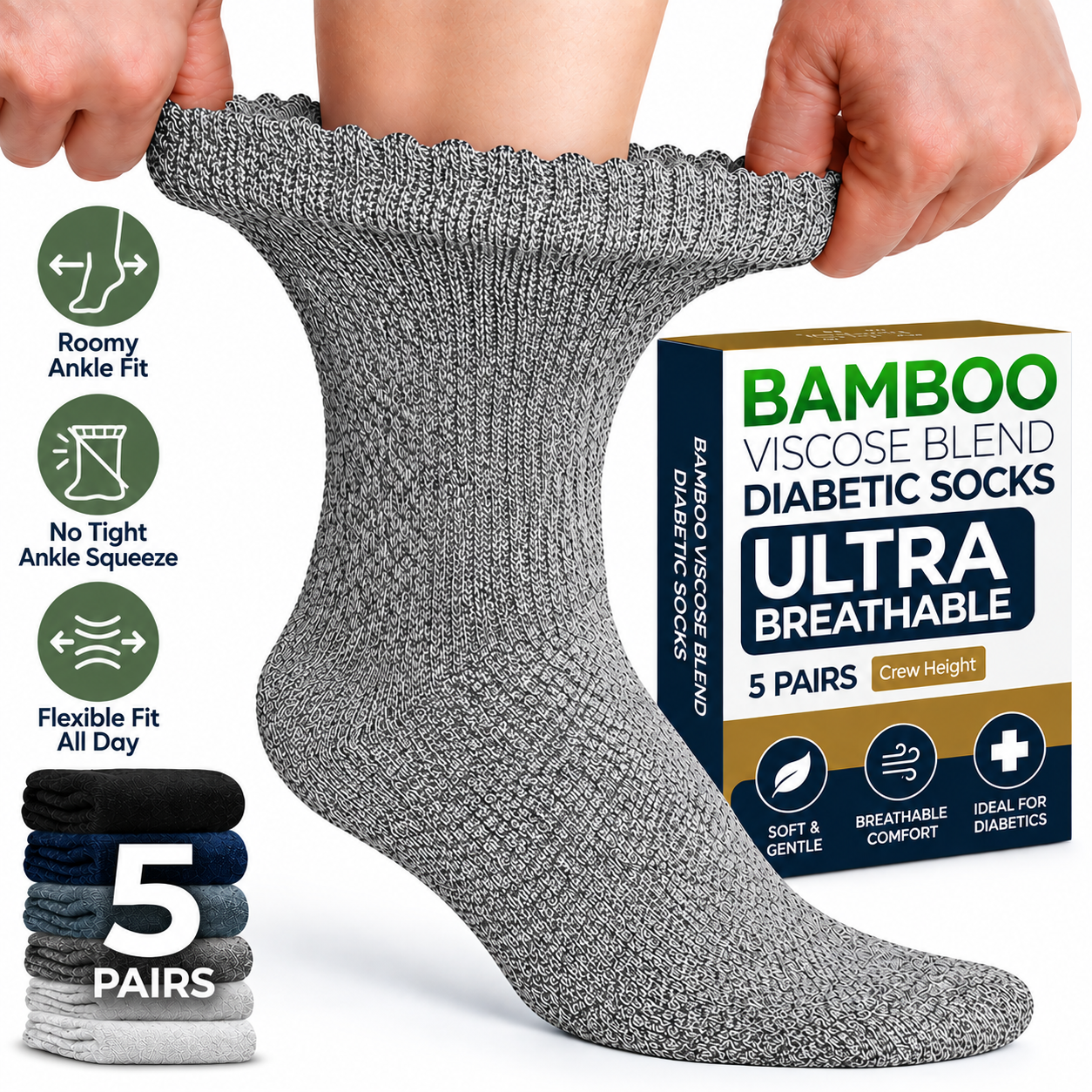
HappyFeet Bamboo Socks: roomy, soft, and designed to move with your ankle rather than against it.
HappyFeet doesn't treat ankle swelling. It doesn't claim to reduce puffiness or address any underlying medical issue. What it does is give your foot and ankle the space and softness to be comfortable throughout the entire day, even as your ankle changes size.
The difference in design is the difference in your day.
What Makes HappyFeet Different
Bamboo is naturally softer than cotton against sensitive skin. For women whose feet feel tender or reactive by afternoon, that softness makes a real difference.
The cuff is designed to accommodate ankle fluctuation throughout the day. It stretches with your ankle rather than resisting it, so you're not fighting your socks by 4 PM.
Bamboo fibers are naturally breathable and moisture-wicking. Feet that tend to feel warm or damp in conventional socks often feel noticeably fresher in bamboo.
Designed for all-day comfort, not just the first two hours. The fit and feel are consistent from morning to evening, even when your ankles aren't.
No rough seams, no scratchy texture. The bamboo material is smooth against skin that's become more sensitive with age, including around the ankle and ball of the foot.
The sock stays on your foot properly without relying on a vice-grip elastic cuff to do it. Comfort and security at the same time.
What Women Are Saying
The feedback from women who've switched to HappyFeet tends to follow a similar pattern: skepticism first, then relief that something finally worked.
"I honestly bought these expecting to be disappointed like every other sock I'd tried. My ankles puff up every afternoon without fail and I'd basically given up on wearing socks comfortably past lunch. These are genuinely different. I wore them for a full day on my feet at my sister's birthday party and when I took them off that evening there was no ring. I'm not used to that. I ordered another three pairs immediately."
"My feet and ankles are sensitive and by mid-afternoon regular socks are just miserable. I'd started keeping a pair of slip-on shoes at work just so I could take my socks off. These are the first socks I've worn in probably two years where I forgot I had them on. The material against my skin is genuinely soft and the top doesn't feel like a rubber band. Simple fix, huge difference."
"I was skeptical because I'd tried a lot of 'soft' socks that were still uncomfortable by the end of the day. My daughter kept telling me to try bamboo. These are soft in a way that actually feels different, not just marketing language. And the ankle part doesn't tighten up when my legs feel swollen after a long day. I teach on my feet all day and I've already recommended these to three colleagues."
"My ankles swell noticeably in hot weather and the summer was rough with regular socks. A friend mentioned these and I figured I had nothing to lose. The breathability alone is worth it. But honestly the best part is putting them on in the morning and not spending the day dreading how they'll feel by 5 PM. It's such a small thing but it's made my days noticeably more comfortable."
What to Expect Once You Switch
HappyFeet isn't a gradual treatment. The comfort shift is something you'll notice on day one. Here's how women typically describe the first week:
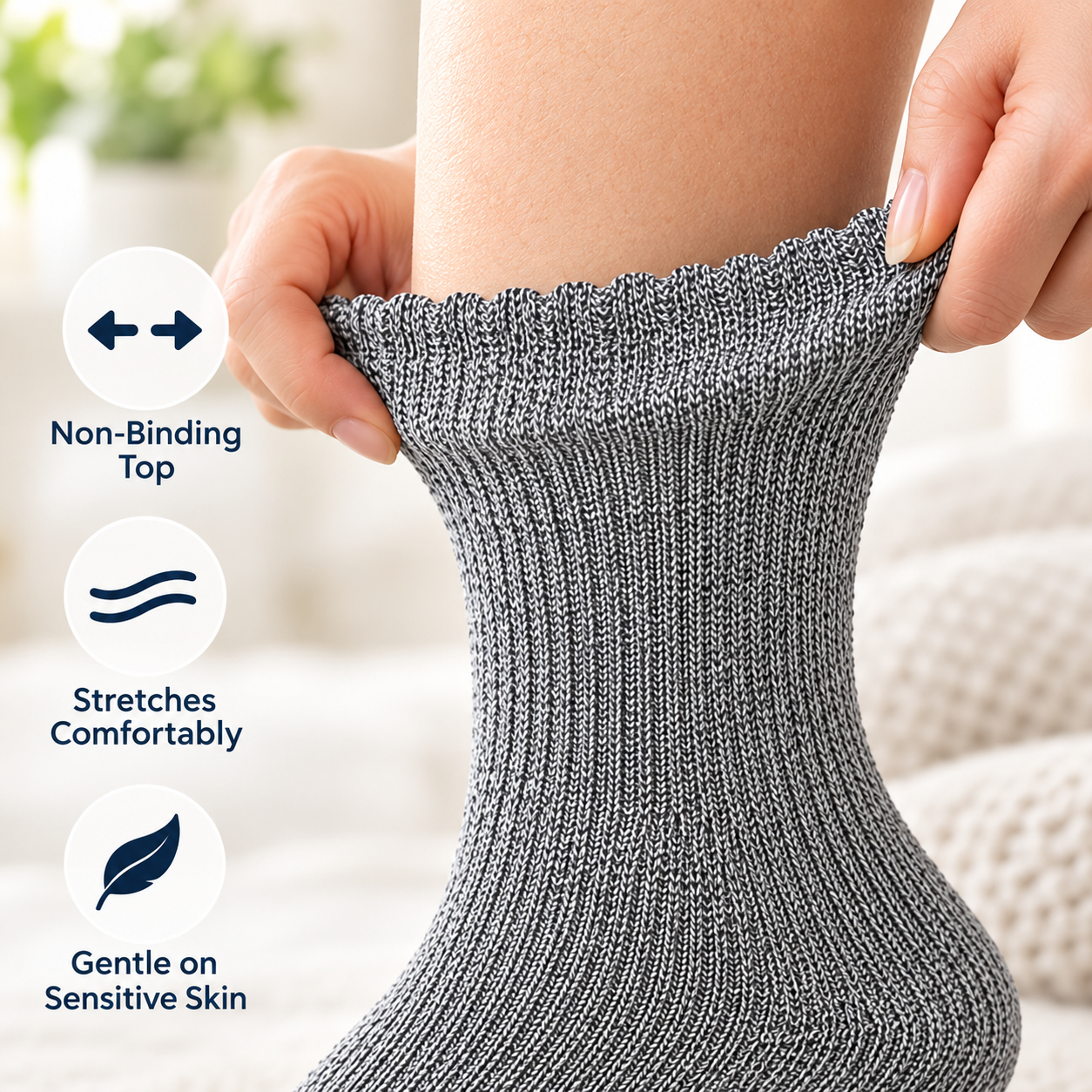
The difference shows up in small moments: ending the day without the sock ring, without that familiar relief of finally getting them off.
The softness of the bamboo is obvious from the first wear. The cuff sits differently on your ankle. By afternoon, you haven't spent any energy thinking about your socks.
You take your socks off in the evening and realize you're not looking for the mark. You check from habit, and it's just not there. That moment catches most women off guard.
You're no longer dreading the sock decision. You put them on, they feel good, and you forget about them. Other women in your life start asking what socks you're wearing.
Going back to conventional socks after wearing HappyFeet feels immediately uncomfortable. Most women report not going back. The drawer reorganizes itself.
HappyFeet vs. Ordinary Socks
| HappyFeet Bamboo | Ordinary Socks | |
|---|---|---|
| Comfortable for swollen ankles by afternoon | ✓ | ✗ |
| Roomy, flexible cuff that doesn't dig in | ✓ | ✗ |
| Soft bamboo fabric against sensitive skin | ✓ | ✗ |
| Breathable and moisture-wicking | ✓ | ✗ |
| Stays in place without squeezing | ✓ | ✗ |
| No visible sock ring at end of day | ✓ | ✗ |
| Designed for fluctuating ankle size | ✓ | ✗ |
| Comfortable for all-day extended wear | ✓ | ✗ |
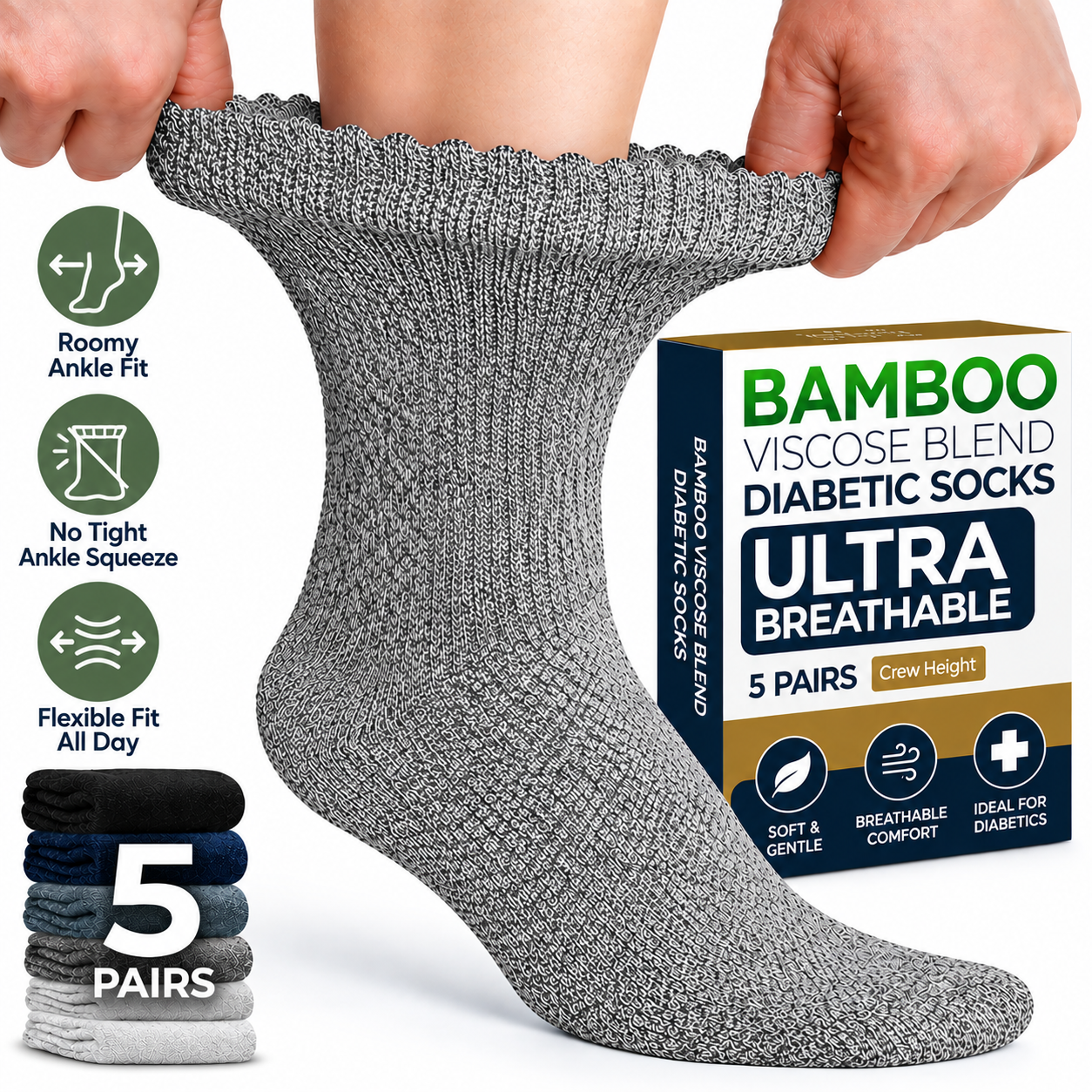
NOTE: This deal is NOT available on Amazon or at retail stores. Only through this page.
Current Offer: Buy 1 Get 5 Pairs of HappyFeet Bamboo Socks
Buy 1 Get 5 Pairs • Limited time offer • While stock lasts
Our Comfort Guarantee
If HappyFeet Bamboo Socks don't feel noticeably more comfortable on your feet and ankles than your current socks, simply reach out to our customer care team. We stand behind the comfort of every pair we send out. Your satisfaction isn't a fine print item. It's the whole point.
Stock is Limited: Offer Ends When Current Inventory Runs Out
Your ankles deserve a sock built for how they actually feel by 5 PM.
Stop ending every day looking for that ring. Switch to HappyFeet today.
GET HAPPYFEET NOW: Save up to 65% Off